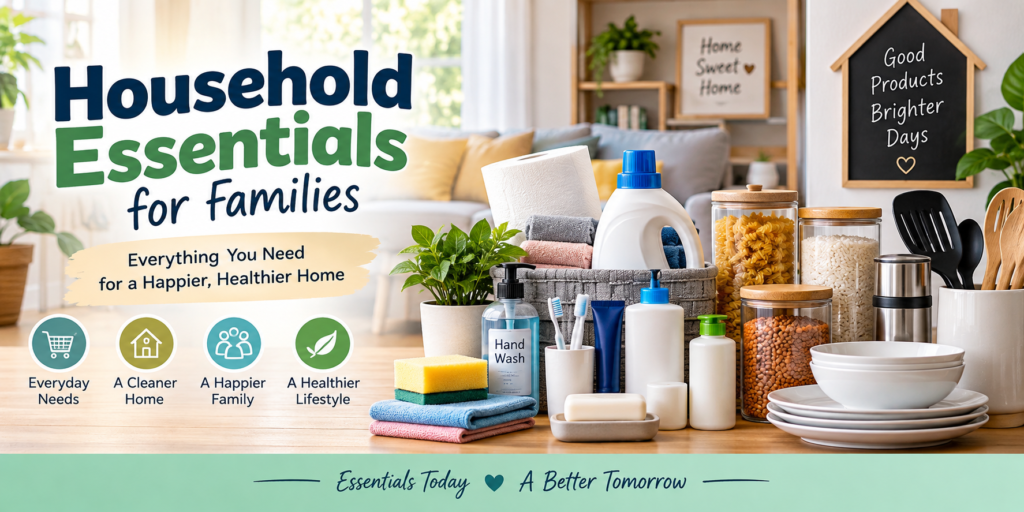
A stocked home makes everyday life easier, more organized and less stressful. Whether you are managing a household, a large family or a home with children, having the right household essentials for families ensures that you are prepared for cooking, cleaning, personal care, laundry and unexpected needs.
From kitchen staples and cleaning supplies to bathroom products, laundry essentials and everyday household items a practical shopping list can help families avoid last-minute purchases and manage their household budget effectively.
This guide provides a family household essentials list to help you plan your grocery and household shopping. It also includes tips, for choosing products, saving money organizing supplies and maintaining a well-prepared home.
1. What Are Household Essentials?
Household essentials are products that families regularly use to manage their daily activities and maintain a clean, comfortable, and functional home.
These products can include:
- Kitchen and cooking supplies
- Food storage products
- Cleaning supplies
- Laundry products
- Bathroom essentials
- Personal care items
- Paper and disposable products
- Home organization products
- Basic household tools
- Child and family essentials
- Emergency and safety supplies
The exact list varies according to family size, lifestyle, budget, and individual needs. However, keeping frequently used products available can make household management much easier.
2. Kitchen Essentials for Families
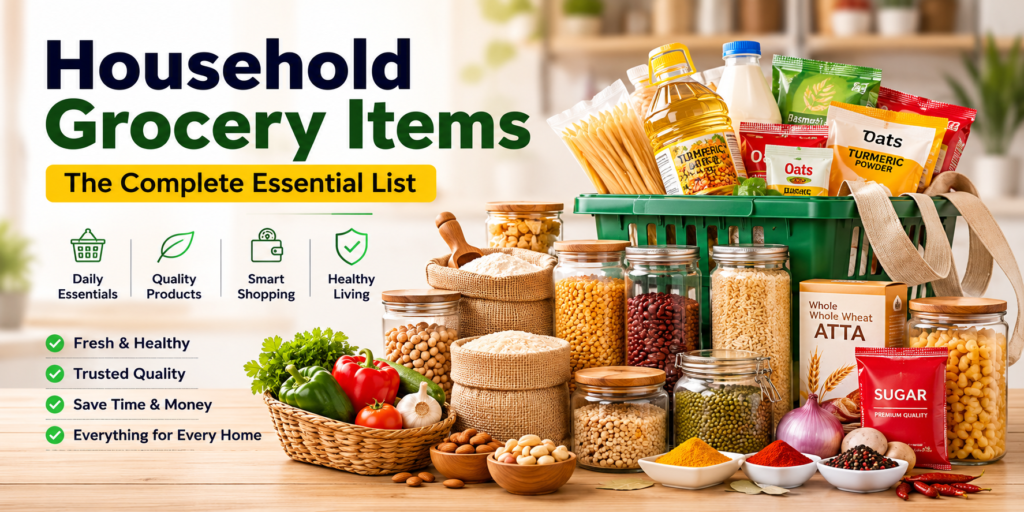
The kitchen is one of the busiest areas in a family home. Keeping basic kitchen supplies and pantry staples available helps you prepare everyday meals without unnecessary shopping trips.
Pantry Staples
Common pantry essentials include:
- Rice
- Wheat flour or atta
- Multigrain flour
- Dal and pulses
- Besan
- Suji
- Poha
- Oats
- Sugar
- Salt
- Jaggery
- Cooking oil
- Spices and masalas
- Tea
- Coffee
- Dry fruits
- Nuts and seeds
- Biscuits
- Breakfast cereals
Families can adjust quantities according to consumption and storage space.
Cooking Essentials
Useful kitchen products include:
- Pressure cooker
- Frying pan
- Saucepan
- Tawa
- Cooking utensils
- Knife set
- Chopping board
- Measuring cups and spoons
- Plates and bowls
- Glasses
- Serving spoons
- Food containers
- Water bottles
Having durable cooking equipment can reduce the need for frequent replacements.
3. Food Storage Essentials
Proper food storage helps maintain kitchen organization and reduce unnecessary food waste.
Important storage products include:
- Airtight containers
- Grain containers
- Spice jars
- Lunch boxes
- Refrigerator storage boxes
- Zip-lock bags
- Reusable food bags
- Glass storage containers
- Water bottles
- Food wraps
Choose containers in different sizes so that rice, flour, pulses, spices, snacks, and leftovers can be stored conveniently.
Labeling containers with product names and dates can also make pantry organization easier.
4. Cleaning Essentials for Families
Regular cleaning is important for maintaining a comfortable household. Families should keep basic cleaning supplies available for kitchens, bathrooms, floors, furniture, and other areas.
Basic Cleaning Products
A household cleaning checklist may include:
- Floor cleaner
- Toilet cleaner
- Bathroom cleaner
- Dishwashing liquid
- Dishwashing bar
- Glass cleaner
- Surface cleaner
- Disinfectant
- Cleaning powder
- Scrubbers
- Sponges
- Microfiber cloths
- Cleaning brushes
- Broom
- Dustpan
- Mop
- Bucket
- Garbage bags
Instead of buying every cleaning product available, focus on products that match the surfaces and cleaning requirements in your home.
5. Laundry Essentials
Laundry is a regular household task, particularly for families with children.
Common laundry essentials include:
- Laundry detergent
- Washing powder
- Liquid detergent
- Fabric conditioner
- Stain remover
- Laundry brush
- Clothes drying rack
- Cloth clips
- Laundry basket
- Iron
- Ironing board
Buying larger detergent packs can sometimes be economical for families, but only when the product will be used before its recommended storage period and there is sufficient storage space.
6. Bathroom Essentials
A well-stocked bathroom should contain everyday personal care and hygiene products.
Bathroom Shopping List
Consider keeping:
- Bath soap
- Handwash
- Shampoo
- Conditioner
- Toothpaste
- Toothbrushes
- Dental floss
- Toilet paper
- Tissues
- Towels
- Hair combs
- Toilet cleaner
- Bathroom cleaning brush
- Floor cleaner
- Bathing accessories
Families should regularly check supplies because products such as toothpaste, soap, shampoo, and handwash can run out unexpectedly.
7. Personal Care Essentials
Personal care products are another important part of a family household essentials list.
Depending on individual requirements, these may include:
- Face wash
- Moisturizer
- Sunscreen
- Body lotion
- Hair oil
- Shampoo
- Conditioner
- Deodorant
- Comb
- Nail cutter
- Cotton pads
- Tissues
- Personal hygiene products
Each family member may have different personal care requirements, so avoid purchasing unnecessary products simply because they are marketed as household necessities.
8. Paper and Disposable Household Essentials
Paper products are frequently used for cleaning, cooking, dining, and personal hygiene.
Useful supplies include:
- Toilet paper
- Facial tissues
- Kitchen paper towels
- Napkins
- Aluminium foil
- Food wrapping sheets
- Garbage bags
- Disposable food containers when needed
Reusable alternatives can be considered where practical. They may reduce recurring household expenses and waste.
9. Household Essentials for Families With Children
Families with children often need additional household products.
Depending on the child’s age, these can include:
- Baby wipes
- Baby toiletries
- Diapers
- Baby laundry detergent
- Feeding bottles
- Bibs
- Children’s towels
- School lunch boxes
- Water bottles
- Child-safe storage products
- Basic stationery
- Snacks and breakfast items
Parents should select age-appropriate products and avoid keeping unsafe household chemicals within children’s reach.
10. Home Organization Essentials
Good organization helps families find products quickly and prevents unnecessary purchases.
Useful home organization products include:
- Storage boxes
- Drawer organizers
- Closet organizers
- Shoe organizers
- Kitchen baskets
- Pantry organizers
- Shelf dividers
- Laundry baskets
- Document folders
- Multipurpose containers
Use clear labels for frequently used household products. Group similar items together, such as cleaning products in one area and pantry supplies in another.
11. Basic Household Tools
Every family should have a few basic tools available for minor household tasks.
A simple household tool kit can include:
- Screwdrivers
- Hammer
- Measuring tape
- Pliers
- Scissors
- Utility knife
- Nails and screws
- Adhesive tape
- Electrical tape
- Small flashlight
- Batteries
For safety, sharp tools and potentially hazardous materials should be stored securely and away from children.
12. Home Safety and Emergency Essentials
Unexpected situations can happen at any time. Keeping basic emergency supplies at home can help families respond more effectively.
Consider having:
- First-aid supplies
- Flashlight
- Spare batteries
- Emergency contact list
- Basic tool kit
- Candles or emergency lighting
- Drinking water
- Essential non-perishable food
- Important document copies
Check emergency supplies periodically and replace damaged, expired, or depleted items.
13. How to Create a Household Essentials Shopping List
A shopping list can prevent unnecessary purchases and help families stay within budget.
Step 1: Check What You Already Have
Before shopping, inspect your pantry, bathroom cabinets, laundry area, and cleaning storage.
Do not buy another product simply because you cannot immediately find the existing one.
Step 2: Divide Products Into Categories
Create categories such as:
- Grocery
- Kitchen
- Cleaning
- Laundry
- Bathroom
- Personal care
- Children
- Home organization
Categorization makes shopping faster and more organized.
Step 3: Identify Frequently Used Products
Prioritize products that your family uses regularly.
For example, rice, flour, cooking oil, detergent, soap, toothpaste, and dishwashing products may need more frequent replenishment than occasional-use products.
Step 4: Set a Budget
Assign an approximate budget to different categories. This helps prevent impulse purchases.
Step 5: Compare Prices and Pack Sizes
Compare the price per unit rather than looking only at the total package price. A larger pack is not automatically cheaper if the unit price is higher.
14. How to Save Money on Household Essentials
Managing household expenses does not necessarily mean buying the cheapest product available. Smart purchasing focuses on value, quality, and actual usage.
Buy According to Consumption
Avoid stocking large quantities of products that your family rarely uses.
Purchase Regularly Used Products in Value Packs
For frequently consumed products, larger packs may offer better value when storage conditions are suitable.
Compare Brands
Compare product quality, quantity, ingredients or specifications where relevant, and price before making a decision.
Make a Shopping List
A written or digital shopping list helps reduce impulse buying.
Take Advantage of Offers Carefully
Discounts can be useful, but buying unnecessary products simply because they are on sale can increase household spending.
Reduce Food Waste
Plan meals around available ingredients and store food properly. Reducing waste is one of the simplest ways to improve household budgeting.
15. Monthly Household Essentials Checklist
A monthly checklist can simplify recurring household shopping.
Kitchen & Pantry
- Rice
- Atta
- Dal and pulses
- Cooking oil
- Salt
- Sugar
- Spices
- Breakfast foods
- Tea or coffee
- Snacks
Cleaning
- Floor cleaner
- Dishwashing liquid
- Toilet cleaner
- Surface cleaner
- Sponges
- Scrubbers
- Garbage bags
Laundry
- Detergent
- Fabric conditioner
- Stain remover
Bathroom & Personal Care
- Soap
- Handwash
- Shampoo
- Toothpaste
- Toothbrushes
- Tissues
- Personal hygiene products
Household
- Batteries
- Light bulbs
- Cleaning cloths
- Storage bags
- Basic household supplies
16. How to Organize Household Essentials Efficiently
An organized home does not require expensive storage solutions. Simple systems can work effectively.
Keep frequently used items within easy reach: Products used every day should be stored where family members can access them easily.
Store similar products together: Keep cleaning products together, pantry staples together, and personal care products in appropriate areas.
Use the first-in, first-out method: When storing multiple packages of similar products, use older items first.
Label storage containers: Labels make it easier to identify products and monitor stock.
Review supplies regularly: Set aside a few minutes each month to check what needs replenishing.
17. Household Essentials for Different Family Sizes
The ideal household essentials list depends on family size.
Small Families
Smaller households can focus on compact packs and avoid excessive inventory. Basic pantry staples, cleaning products, personal care items, and laundry supplies may be sufficient.
Medium-Sized Families
Medium-sized families generally need larger quantities of frequently used products such as detergent, toiletries, pantry staples, and cleaning supplies.
Large Families
Large families may benefit from bulk purchasing of regularly used items, provided they have adequate storage space and can use products within appropriate periods.
The goal is not to have the maximum amount of supplies—it is to maintain a practical level of inventory.
18. How Often Should You Restock Household Essentials?
Different products require different restocking schedules.
Weekly: Fresh groceries, milk, vegetables, fruits, and frequently consumed snacks.
Monthly: Rice, flour, pulses, cooking oil, detergent, cleaning products, toiletries, and other regularly used household items.
Every few months: Batteries, storage products, certain cleaning tools, and less frequently used household supplies.
Occasionally: Basic tools, emergency supplies, and replacement household equipment.
Your family’s actual consumption should determine the schedule.
19. Why a Household Essentials Checklist Is Important
A household checklist offers several benefits:
- Saves shopping time
- Helps control household spending
- Reduces last-minute shopping
- Prevents essential products from running out
- Makes monthly planning easier
- Helps identify unnecessary purchases
- Improves pantry organization
- Supports better household management
A checklist can be especially useful for busy families because it turns household shopping into a simple, repeatable process.
20. Final Household Essentials Checklist
A practical family household essentials list should cover the main areas of daily living:
Kitchen: Rice, flour, pulses, oil, spices, cookware, utensils, and food-storage containers.
Cleaning: Floor cleaner, toilet cleaner, dishwashing products, disinfectant, mop, broom, brushes, and cleaning cloths.
Laundry: Detergent, fabric conditioner, stain remover, laundry basket, and drying accessories.
Bathroom: Soap, handwash, shampoo, toothpaste, toothbrushes, towels, and toilet-care products.
Personal Care: Hair care, skincare, hygiene products, and grooming essentials.
Children: Age-appropriate hygiene products, feeding supplies, snacks, lunch boxes, and school-related essentials.
Organization: Storage boxes, organizers, baskets, labels, and containers.
Safety: First-aid supplies, flashlight, batteries, and basic tools.
Conclusion
Maintaining a home that has everything you need does not mean buying a lot all at. The best way is to know what your family uses every day, make a list of the things you need for the house, track how much you use and buy based on the money you have available.
From food that stays in the kitchen and things used for cleaning to items for washing clothes, things needed in the bathroom, products for taking care of yourself and important items for safety, having the things on hand can make managing the house much easier.
Checking what you have every month can help you see what is running out, stop buying the things twice, cut down on waste and make sure your family is ready for anything. No matter if you go shopping once a week a month or online, a carefully made list of the things your family needs can make shopping simpler and cheaper.
FAQs
1. What are the most important household essentials for families?
The most important household essentials generally include pantry staples, cooking supplies, cleaning products, laundry detergent, bathroom products, personal care items, food-storage containers, and basic emergency supplies.
2. How can I make a household essentials shopping list?
Start by checking what you already have at home. Divide your list into categories such as kitchen, cleaning, laundry, bathroom, personal care, children, and household supplies. Then prioritize products that need replenishing.
3. How often should families buy household essentials?
Frequently used groceries may need weekly shopping, while pantry staples, cleaning supplies, toiletries, and laundry products can often be purchased monthly. The ideal schedule depends on household consumption.
4. How can families save money when buying household essentials?
Make a shopping list, compare unit prices, purchase frequently used products in suitable value packs, avoid unnecessary impulse purchases, and reduce food waste.
5. What household essentials should always be kept in stock?
Families should generally keep basic food staples, cooking ingredients, cleaning supplies, detergent, soap, toothpaste, handwash, toiletries, garbage bags, and basic emergency supplies available.