
What Are Household Grocery Items?
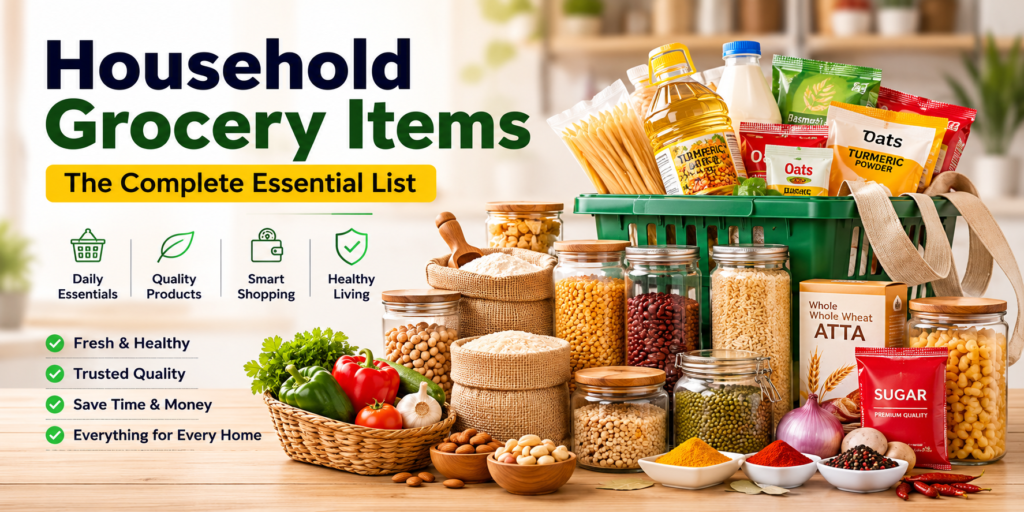
Essential House Products used in households to prepare meals, keep oneself clean, eat, and maintain good health fall under the category of household goods. These include groceries such as food, drinks, dairy items, snacks, and other personal care products.
The goods mentioned above fall under the category of necessities due to the reason stated below.
1. Grains & Cereals
Grains form the foundation of many meals. Keep these staples in your pantry:
- Rice
- Wheat flour (Atta)
- Basmati rice
- Oats
- Poha
- Suji (Semolina)
- Vermicelli
- Corn flour
- Maida
- Breakfast cereals
These products have a longer shelf life and are ideal for monthly grocery shopping.
2. Pulses & Lentils
Protein-rich pulses are an important part of every household.
Popular grocery items include:
- Toor Dal
- Moong Dal
- Masoor Dal
- Chana Dal
- Urad Dal
- Rajma
- Kabuli Chana
- Black Chana
- Green Gram
Store them in airtight containers to maintain freshness.
3. Cooking Oils & Ghee
Cooking oils are daily kitchen essentials.
Common options include:
- Mustard Oil
- Sunflower Oil
- Groundnut Oil
- Rice Bran Oil
- Olive Oil
- Coconut Oil
- Desi Ghee
Choose oils according to your cooking style and nutritional preferences.
4. Spices & Seasonings
No kitchen is complete without spices.
Essential spices include:
- Turmeric Powder
- Red Chilli Powder
- Coriander Powder
- Cumin Seeds
- Mustard Seeds
- Garam Masala
- Black Pepper
- Cloves
- Cinnamon
- Cardamom
- Bay Leaves
- Asafoetida (Hing)
Fresh spices improve both taste and aroma.
5. Sugar, Salt & Sweeteners
Keep these basic essentials stocked:
- Sugar
- Brown Sugar
- Jaggery
- Rock Salt
- Table Salt
- Black Salt
- Honey
6. Dairy Products
Daily dairy products include:
- Milk
- Curd
- Butter
- Cheese
- Paneer
- Cream
- Yogurt
Purchase fresh dairy products according to your weekly requirements.
7. Tea, Coffee & Beverages
Popular beverages include:
- Tea Leaves
- Green Tea
- Coffee
- Instant Coffee
- Fruit Juice
- Soft Drinks
- Energy Drinks
- Health Drinks
Hydration products are among the most frequently purchased grocery items.
8. Snacks & Ready-to-Eat Foods
Perfect for quick hunger cravings:
- Biscuits
- Cookies
- Chips
- Namkeen
- Popcorn
- Instant Noodles
- Pasta
- Ready-to-Eat Meals
- Dry Fruits
- Roasted Nuts
Choose healthier snack options whenever possible.
9. Fresh Fruits & Vegetables
A balanced grocery list always includes fresh produce.
Examples include:
Fruits
- Apples
- Bananas
- Oranges
- Grapes
- Mangoes
- Papaya
- Watermelon
Vegetables
- Potatoes
- Onions
- Tomatoes
- Spinach
- Carrots
- Cauliflower
- Cabbage
- Green Peas
- Okra
Fresh fruits and vegetables provide essential vitamins and minerals.
10. Frozen Foods
Many households keep frozen items for convenience.
Examples include:
- Frozen Vegetables
- Frozen Peas
- Frozen Corn
- Frozen French Fries
- Frozen Snacks
- Ice Cream
11. Baking Essentials
Useful for home baking enthusiasts:
- Baking Powder
- Baking Soda
- Cocoa Powder
- Vanilla Essence
- Yeast
- Chocolate Chips
- Custard Powder
12. Household Cleaning Products
Apart from food items, grocery stores also stock cleaning essentials.
Include:
- Dishwashing Liquid
- Laundry Detergent
- Floor Cleaner
- Toilet Cleaner
- Glass Cleaner
- Disinfectant
- Garbage Bags
- Cleaning Brushes
- Sponges
Maintaining hygiene is just as important as stocking food.
13. Personal Care Products
Many grocery stores offer daily hygiene products.
Examples include:
- Soap
- Shampoo
- Toothpaste
- Toothbrush
- Face Wash
- Body Lotion
- Hand Wash
- Deodorant
- Sanitary Napkins
- Shaving Products
14. Baby Care Essentials
Families with children should keep:
- Baby Food
- Baby Diapers
- Baby Wipes
- Baby Shampoo
- Baby Soap
- Baby Lotion
Benefits of Keeping Household Grocery Items Stocked
Having a well-stocked home offers several advantages:
- Saves time on frequent shopping trips
- Helps prepare meals quickly
- Reduces unnecessary spending
- Prevents emergency grocery runs
- Supports healthier eating habits
- Makes monthly budgeting easier
- Ensures household preparedness during emergencies
Tips for Smart Grocery Shopping
Follow these practical shopping tips:
Prepare a Grocery List
Always make a checklist before shopping to avoid impulse purchases.
Buy Monthly Essentials in Bulk
Products like rice, flour, sugar, and pulses are often cheaper when purchased in larger quantities.
Compare Prices
Whether shopping online or offline, compare prices to get the best value.
Check Expiry Dates
Always inspect manufacturing and expiry dates before purchasing packaged goods.
Store Items Properly
Use airtight containers and keep products away from moisture to extend shelf life.
Take Advantage of Discounts
Watch for seasonal offers, combo deals, and loyalty rewards to save money.
Online Grocery Shopping vs Offline Grocery Shopping
| Online Grocery Shopping | Offline Grocery Shopping |
| Home delivery | Immediate purchase |
| Easy price comparison | Physical product inspection |
| Time-saving | No delivery wait |
| Digital payment options | Instant availability |
| Frequent discounts | Personalized customer service |
Many households now combine both methods for maximum convenience.
How to Create a Monthly Grocery Checklist
A practical monthly grocery list should include:
- Grains and flour
- Pulses and lentils
- Cooking oil
- Spices
- Sugar and salt
- Tea and coffee
- Snacks
- Dairy products
- Fresh fruits
- Fresh vegetables
- Cleaning products
- Personal care products
Review your inventory before shopping to avoid duplicate purchases.
Conclusion
Grocery essentials for homes are a fundamental part of day-to-day life. It is important to maintain a stock of basic groceries, household cleaners, and personal care products in order to be more convenient and save money.
Whether you prefer buying groceries online or through a local store, it is always useful to have an organized list of your grocery essentials. This will help you make smarter choices when shopping.
Frequently Asked Questions (FAQs)
1. What are household grocery items?
Household grocery items include daily essentials such as rice, flour, pulses, cooking oil, spices, dairy products, fruits, vegetables, snacks, cleaning supplies, and personal care products.
2. How often should I buy household grocery items?
Most dry groceries can be purchased monthly, while fresh fruits, vegetables, dairy products, and bread are usually bought weekly.
3. What are the most essential grocery items for a family?
Rice, flour, pulses, cooking oil, spices, milk, vegetables, fruits, tea, sugar, salt, cleaning products, and toiletries are among the most essential household grocery items.
4. Is online grocery shopping better than offline shopping?
Online grocery shopping offers convenience, home delivery, and price comparisons, while offline shopping allows you to inspect products before purchasing. The best option depends on your preferences and needs.
5. How can I save money on grocery shopping?
Prepare a shopping list, buy staples in bulk, compare prices, use coupons or discounts, avoid impulse purchases, and store food properly to reduce waste.