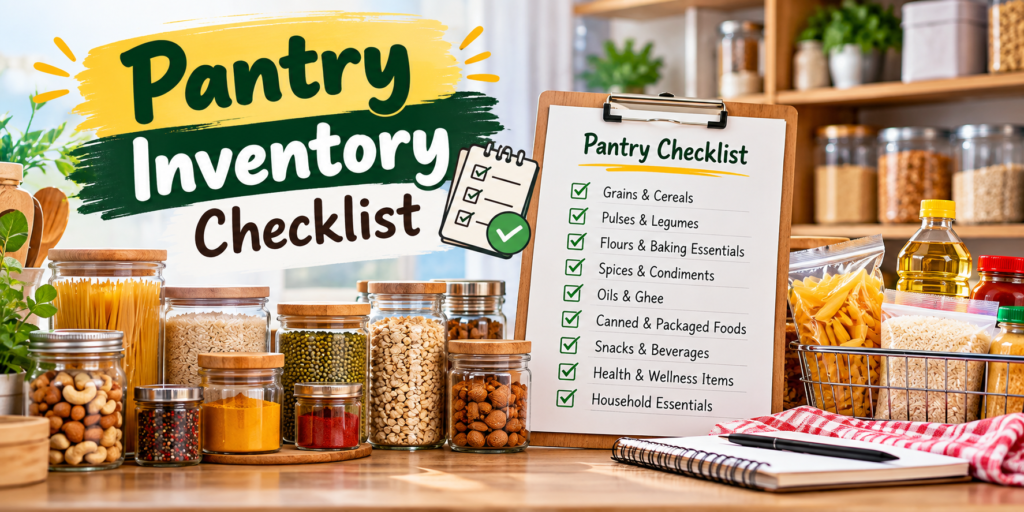
Have you ever opened your kitchen pantry? Pantry inventory checklist Found three packets of the same thing while realizing you have completely run out of something you use every day? A maintained pantry inventory checklist can solve this common problem in many homes.
Keeping track of pantry essentials helps you know what you have, what you need and what should be used soon. It can also make grocery shopping easier, reduce purchases, minimize food waste and help you manage your household grocery budget more effectively.
Whether you have a kitchen cabinet or a large pantry an inventory system can help you stay organized. From rice, flour, pulses and cooking oil, to spices, breakfast foods, snacks and household essentials a simple checklist can give you an overview of your grocery stock.
In this guide we’ll explain how to create a pantry inventory checklist what items to include how to update it and how proper pantry management can make grocery shopping simpler.
What Is a Pantry Inventory Checklist?
A pantry inventory checklist is a list used to record and monitor the food and grocery products stored in your pantry.
It allows you to track:
- Items currently available
- Quantity remaining
- Items running low
- Expiry or best-before dates
- Items that need to be purchased
- Frequently used grocery products
- Items that should be consumed soon
Instead of guessing what is available at home before going grocery shopping, you can quickly check your inventory and create a targeted shopping list.
For example, your inventory might look like this:
| Pantry Item | Quantity | Status |
| Rice | 5 kg | Available |
| Wheat Flour | 2 kg | Running Low |
| Toor Dal | 1 kg | Available |
| Sugar | 500 g | Running Low |
| Cooking Oil | 1 L | Available |
| Salt | 1 kg | Available |
| Tea | 250 g | Running Low |
This simple system can make grocery planning much more efficient.
Why Is a Pantry Inventory Checklist Important?
Maintaining a pantry inventory is useful for both organization and budgeting. Here are some of its major benefits.
1. Prevents Running Out of Essential Items
Some pantry products are used almost every day. Running out of staples such as flour, rice, salt, cooking oil, or pulses can disrupt meal preparation.
An inventory checklist helps you identify products that are running low before they become urgent purchases.
2. Reduces Duplicate Purchases
Without checking your pantry, it’s easy to buy something you already have.
For example, you might purchase another packet of pasta only to discover two unopened packets already sitting in your cupboard.
Checking your inventory before shopping helps prevent unnecessary purchases.
3. Helps Reduce Food Waste
Food waste can occur when products are forgotten at the back of a pantry and eventually expire.
An inventory checklist makes it easier to identify products that need to be used first.
A useful approach is the FIFO method — First In, First Out. Place older products toward the front and newer products behind them so older stock gets used first.
4. Makes Grocery Shopping Easier
A pantry inventory can become the foundation of your grocery shopping list.
Instead of walking through a grocery store trying to remember what you need, you can prepare a list based on actual household requirements.
5. Helps Control Grocery Expenses
When you know what you already have, you can avoid unnecessary purchases.
This is particularly useful for households trying to maintain a monthly grocery budget.
6. Makes Meal Planning Easier
Knowing which ingredients are available can help you plan meals around existing pantry supplies.
For example, if you have rice, lentils, spices, and vegetables available, you can plan several meals without purchasing additional staple ingredients.
Complete Pantry Inventory Checklist
A useful pantry inventory should cover the main categories of food and grocery products commonly stored at home.
Below is a comprehensive pantry checklist.
1. Grains and Cereals
Grains are important pantry staples in many households.
Common items include:
- Rice
- Basmati rice
- Brown rice
- Wheat flour
- Multigrain flour
- Oats
- Semolina or sooji
- Poha
- Dalia
- Cornmeal
- Quinoa
- Barley
- Pasta
- Noodles
- Vermicelli
Check quantities regularly, especially for products used frequently.
2. Pulses and Lentils
Pulses are important pantry staples and can have a relatively long shelf life when stored properly.
Your checklist may include:
- Toor dal
- Moong dal
- Masoor dal
- Chana dal
- Urad dal
- Whole green gram
- Chickpeas
- Rajma
- Black-eyed peas
- Dried peas
- Soybeans
Store pulses in clean, dry, airtight containers to help maintain quality.
3. Cooking Oils and Fats
Keep track of cooking oils and other commonly used fats.
Examples include:
- Mustard oil
- Sunflower oil
- Groundnut oil
- Soybean oil
- Olive oil
- Coconut oil
- Ghee
- Butter, if stored appropriately
When checking inventory, note both quantity and best-before information.
4. Spices and Seasonings
Spices are often purchased in small quantities but can accumulate over time.
Your spice inventory can include:
- Turmeric powder
- Red chilli powder
- Coriander powder
- Cumin
- Black pepper
- Garam masala
- Mustard seeds
- Fennel seeds
- Fenugreek seeds
- Cardamom
- Cinnamon
- Cloves
- Bay leaves
- Asafoetida
- Chaat masala
- Kitchen masala
- Salt
Avoid keeping spices for excessively long periods, as their flavor and aroma can decline over time.
5. Baking Essentials
If you regularly bake at home, create a separate section for baking ingredients.
Consider including:
- Maida
- Baking powder
- Baking soda
- Cocoa powder
- Cornstarch
- Vanilla extract
- Chocolate chips
- Dry yeast
- Icing sugar
- Brown sugar
- Sprinkles
- Cake decorations
Check these products before purchasing new supplies.
6. Breakfast Foods
Breakfast items can be another important pantry category.
Examples include:
- Oats
- Cornflakes
- Muesli
- Breakfast cereals
- Peanut butter
- Jam
- Honey
- Bread spreads
- Dry fruits
- Nuts
- Seeds
Keep frequently consumed products toward the front of your pantry for easy access.
7. Nuts and Seeds
Nuts and seeds can be useful pantry ingredients for snacks, cooking, and breakfast.
Your checklist may include:
- Almonds
- Cashews
- Walnuts
- Pistachios
- Raisins
- Dates
- Figs
- Chia seeds
- Flax seeds
- Pumpkin seeds
- Sunflower seeds
- Sesame seeds
Because some nuts and seeds contain natural oils, store them properly and check their freshness regularly.
8. Canned and Packaged Foods
Depending on your household’s eating habits, you may store:
- Canned beans
- Canned corn
- Tomato products
- Soups
- Pasta sauces
- Packaged meals
- Pickles
- Chutneys
- Ready-to-cook foods
Check expiry or best-before dates regularly and place products that should be used first where they are easy to see.
9. Sauces and Condiments
A pantry inventory may also include:
- Tomato ketchup
- Mayonnaise
- Soy sauce
- Chilli sauce
- Vinegar
- Mustard sauce
- Pasta sauce
- Sandwich spreads
- Pickles
- Chutneys
Some products may require refrigeration after opening, so always follow the storage instructions on the packaging.
10. Snacks
If your household regularly purchases snacks, include them in your inventory.
Examples include:
- Biscuits
- Cookies
- Chips
- Namkeen
- Popcorn
- Crackers
- Snack bars
- Roasted nuts
- Dry snacks
Avoid buying large quantities simply because an item is on sale unless you are confident it will be consumed before its quality declines.
11. Beverages
Your beverage inventory may include:
- Tea
- Coffee
- Green tea
- Hot chocolate
- Juice
- Instant drink mixes
- Packaged beverages
Record the quantity of frequently consumed products so you can add them to your shopping list before they run out.
12. Sweeteners and Sugar Products
Common pantry items include:
- White sugar
- Brown sugar
- Jaggery
- Jaggery powder
- Honey
- Maple syrup
- Icing sugar
Store these products according to their packaging instructions to maintain quality.
13. Household Essentials
A pantry or kitchen storage area may also contain non-food essentials.
Depending on your home’s storage setup, you may track:
- Food storage bags
- Aluminium foil
- Cling film
- Baking paper
- Paper towels
- Disposable containers
- Kitchen tissues
- Garbage bags
- Cleaning supplies
Keeping these items on a separate checklist can make household shopping easier.
How to Create Your Own Pantry Inventory Checklist
Creating an inventory doesn’t have to be complicated. Follow these simple steps.
Step 1: Take Everything Out
Start by reviewing your pantry shelves and storage cabinets.
Group similar products together.
For example:
Grains: rice, flour, oats, pasta
Pulses: dal, chickpeas, rajma
Spices: turmeric, cumin, chilli powder
Snacks: biscuits, chips, crackers
This gives you a clear picture of your current stock.
Step 2: Check Quantities
Record approximately how much of each product you have.
You don’t always need exact measurements.
You can use simple labels such as:
- Full
- Half
- Low
- Empty
For frequently used products, recording exact quantities can be more useful.
Step 3: Check Dates
Look at the expiry or best-before dates of packaged products.
Move products that need to be used sooner toward the front.
Step 4: Identify Duplicates
If you have multiple packages of the same product, group them together.
This prevents you from accidentally buying more.
Step 5: Create a Restocking List
Mark products that are running low.
These can automatically become part of your next grocery shopping list.
How Often Should You Check Your Pantry Inventory?
The ideal frequency depends on household size and shopping habits.
Weekly
A quick weekly check is useful for frequently consumed products such as:
- Milk-related pantry products
- Breakfast foods
- Snacks
- Cooking oil
- Flour
- Rice
- Pulses
Monthly
A more detailed monthly inventory can cover:
- Spices
- Baking ingredients
- Canned foods
- Dry fruits
- Sauces
- Household supplies
Before Grocery Shopping
Always check your pantry before placing a large grocery order or visiting the store.
This can help you avoid unnecessary purchases.
Pantry Inventory vs. Grocery Shopping List
These two lists serve different purposes.
Pantry Inventory
Shows what you currently have.
Grocery Shopping List
Shows what you need to purchase.
For example:
Pantry Inventory:
- Rice — 5 kg
- Dal — 2 kg
- Sugar — 500 g
- Oil — 1 litre
Shopping List:
- Sugar
- Cooking oil
- Oats
- Tea
Your inventory therefore acts as the information source for your shopping list.
Tips for Better Pantry Organization
Label Storage Containers
Clearly labeled containers make it easier to identify products quickly.
Group Similar Products
Keep rice and flour together, pulses together, and spices together.
Keep Frequently Used Items Accessible
Products used every day should be easy to reach.
Use Clear Containers
Transparent containers allow you to see how much product remains.
Don’t Overbuy
Buying large quantities can seem economical, but excessive stock can lead to clutter and food waste.
Keep an Expiry-Date Section
Products approaching their best-before dates can be placed in a dedicated “use soon” area.
Maintain a Digital Inventory
You can maintain your pantry inventory using:
- Smartphone notes
- Spreadsheet
- Grocery-list app
- Printable checklist
- Household management app
Choose the method that is easiest for your household to maintain consistently.
Printable Pantry Inventory Checklist
You can use this basic checklist as a starting point:
Grains & Staples
- Rice
- Wheat flour
- Multigrain flour
- Oats
- Poha
- Dalia
- Sooji
- Pasta
- Noodles
Pulses & Legumes
- Toor dal
- Moong dal
- Masoor dal
- Chana dal
- Urad dal
- Chickpeas
- Rajma
- Dried peas
Cooking Essentials
- Cooking oil
- Ghee
- Salt
- Sugar
- Jaggery
Spices
- Turmeric
- Chilli powder
- Coriander powder
- Cumin
- Black pepper
- Garam masala
- Mustard seeds
Breakfast
- Cereal
- Muesli
- Peanut butter
- Jam
- Honey
- Tea
- Coffee
Nuts & Dry Fruits
- Almonds
- Cashews
- Walnuts
- Pistachios
- Raisins
- Dates
- Figs
Snacks
- Biscuits
- Cookies
- Chips
- Crackers
- Namkeen
- Popcorn
Sauces & Condiments
- Ketchup
- Mayonnaise
- Soy sauce
- Vinegar
- Chilli sauce
- Pickles
- Chutneys
How a Pantry Inventory Can Save Money
A pantry inventory is more than an organizational tool. It can also support better grocery budgeting.
Suppose a household spends money every week on groceries. Without an inventory system, they may purchase duplicate products, forget ingredients they already have, or allow food to expire.
By checking existing supplies before shopping, you can:
- Avoid duplicate purchases
- Plan meals around available ingredients
- Buy only what is needed
- Track frequently used products
- Reduce food waste
- Take better advantage of products already purchased
Over time, these small improvements can contribute to more efficient household grocery spending.
Pantry Inventory Checklist for Online Grocery Shopping
Online grocery shopping makes inventory management even more useful.
Before placing an online grocery order:
1. Check your pantry.
Identify products that are available and those running low.
2. Compare quantities.
Don’t automatically add an item to your cart just because it appears in your usual shopping list.
3. Check your meal plan.
Consider what ingredients you will need for the upcoming week.
4. Build your shopping cart.
Add only the products that are actually required.
5. Review the cart.
Remove unnecessary duplicates before placing the order.
This approach can make online grocery shopping faster and more organized.
Final Thoughts
A pantry inventory checklist is a simple but practical way to manage household groceries. It helps you understand what you already have, identify items that are running low, reduce duplicate purchases, and organize your grocery shopping more effectively.
You don’t need a complicated system. A basic checklist divided into categories such as grains, pulses, spices, cooking essentials, breakfast foods, snacks, beverages, and household supplies can be enough.
The key is consistency. Review your pantry regularly, place older products where they can be used first, and update your shopping list based on your actual inventory.
With a well-maintained pantry inventory, grocery shopping becomes more organized, budgeting becomes easier, and your kitchen can stay stocked with the essentials your household uses most.
FAQs About Pantry Inventory Checklists
1. What should be included in a pantry inventory checklist?
A pantry inventory checklist should include commonly stored products such as rice, flour, pulses, spices, cooking oil, sugar, snacks, breakfast foods, dry fruits, sauces, beverages, and other household essentials.
2. How often should I update my pantry inventory?
A quick weekly check and a more detailed monthly review can work well for many households. You should also check your inventory before major grocery shopping.
3. How does a pantry inventory help save money?
It helps prevent duplicate purchases, reduces unnecessary shopping, supports meal planning, and can reduce food waste caused by forgotten products.
4. What is the FIFO method for pantry organization?
FIFO means First In, First Out. It involves using older products before newer ones. Place older items toward the front and newer items behind them to make this easier.
5. Can I maintain a pantry inventory digitally?
Yes. You can use a spreadsheet, smartphone notes, grocery-list app, or another digital system. A digital inventory can be particularly convenient if you frequently shop online.