Have you ever opened your kitchen cabinet? Found that you do not have anything to cook even though you spent a lot of money on groceries? You are not the one. A lot of people have trouble with the cost of groceries going up buying things on impulse and throwing away food, which makes it hard to keep a stocked kitchen without spending too much money.
The good thing is that you do not need to go on a shopping trip to have a kitchen with everything you need. If you plan carefully, shop for groceries, in a way and pick pantry staples that can be used in many different ways you can make a kitchen that helps you make tasty and healthy meals while saving money every week.
Whether you are a student, someone who works or taking care of a family, this guide will show you how to stock your pantry without spending a lot of money, what things you should buy first, where you can save money and how to organize everything so that it is easy to use.
Why Every Home Needs a Well-Stocked Pantry
A pantry isn’t just a storage space—it’s the foundation of smart meal planning.
Benefits include:
- Saves money on grocery shopping
- Reduces food waste
- Makes meal preparation faster
- Helps during emergencies
- Reduces unnecessary food delivery expenses
- Encourages healthier eating habits
- Prevents impulse purchases
Having basic pantry essentials means you can prepare dozens of meals without frequent grocery trips.
What Is a Pantry?
A pantry is a dedicated area in your kitchen where you store shelf-stable food items like:
- Rice
- Flour
- Pulses
- Pasta
- Cooking oil
- Spices
- Sugar
- Tea and coffee
- Canned foods
- Dry snacks
A properly stocked pantry ensures you always have ingredients ready for everyday cooking.
Step 1: Create a Budget Before Shopping
One of the biggest mistakes shoppers make is entering a grocery store without a spending limit.
Before shopping:
- Decide your monthly grocery budget.
- Separate pantry essentials from fresh produce.
- Reserve extra money for discounts and bulk purchases.
Sample Monthly Pantry Budget
| Category | Budget |
| Rice & Grains | ₹800 |
| Flour | ₹500 |
| Pulses | ₹700 |
| Cooking Oil | ₹700 |
| Spices | ₹400 |
| Tea & Coffee | ₹300 |
| Snacks | ₹500 |
| Miscellaneous | ₹600 |
Adjust according to your household size.
Step 2: Make a Pantry Inventory
Before buying anything, inspect your kitchen.
Ask yourself:
- What do I already have?
- What is about to expire?
- What do I use most often?
- Which ingredients are missing?
This simple habit prevents duplicate purchases.
Step 3: Start with Basic Pantry Essentials
Focus on versatile ingredients that can be used in multiple recipes.
Grains
- Rice
- Wheat flour (Atta)
- Oats
- Poha
- Semolina (Sooji)
- Pasta
- Vermicelli
These provide the base for countless meals.
Pulses and Beans
- Toor Dal
- Moong Dal
- Masoor Dal
- Chana Dal
- Rajma
- Kabuli Chana
- Black Gram (Urad Dal)
Pulses are affordable sources of protein and have a long shelf life.
Cooking Oils
Choose oils according to your cooking style:
- Mustard Oil
- Groundnut Oil
- Sunflower Oil
- Rice Bran Oil
- Ghee
Buy larger packs only if you use them regularly.
Essential Spices
Your spice collection doesn’t need to be expensive.
Start with:
- Turmeric
- Red Chili Powder
- Coriander Powder
- Cumin Seeds
- Mustard Seeds
- Garam Masala
- Black Pepper
- Asafoetida (Hing)
- Bay Leaves
These cover most Indian recipes.
Baking Essentials
Even if you bake occasionally, keep:
- Baking Powder
- Baking Soda
- Corn Flour
- Cocoa Powder
- Vanilla Essence
Breakfast Staples
Budget-friendly breakfast foods include:
- Oats
- Muesli
- Cornflakes
- Peanut Butter
- Bread Spread
- Tea
- Coffee
Sweeteners
Stock:
- Sugar
- Jaggery
- Honey (optional)
Step 4: Buy in Bulk—But Wisely
Buying in bulk often reduces the cost per kilogram.
Ideal bulk purchases include:
- Rice
- Wheat Flour
- Dal
- Sugar
- Salt
- Cooking Oil
- Dry Beans
Avoid bulk buying foods that expire quickly or that your family rarely eats.
Step 5: Shop Seasonal Sales
Take advantage of:
- Festival discounts
- End-of-season sales
- Store loyalty programs
- Cashback offers
- Grocery combo deals
Planning purchases around sales can significantly lower your grocery bill.
Step 6: Compare Unit Prices
A larger pack isn’t always cheaper.
Instead of looking only at the total price, compare:
- Price per kg
- Price per litre
- Price per unit
This helps identify the best value.
Step 7: Choose Store Brands
Many supermarket private labels offer the same quality as premium brands at a lower price.
Common products include:
- Rice
- Flour
- Pulses
- Sugar
- Salt
- Spices
Trying store brands can save 10–30% on grocery costs.
Step 8: Build Your Pantry Slowly
Don’t feel pressured to buy everything at once.
Instead:
Week 1:
- Rice
- Flour
- Salt
- Sugar
Week 2:
- Dal
- Cooking Oil
- Spices
Week 3:
- Tea
- Coffee
- Snacks
Week 4:
- Pasta
- Oats
- Dry Fruits
Within a month, you’ll have a complete pantry without exceeding your budget.
Step 9: Organize Your Pantry
A well-organized pantry prevents waste.
Tips:
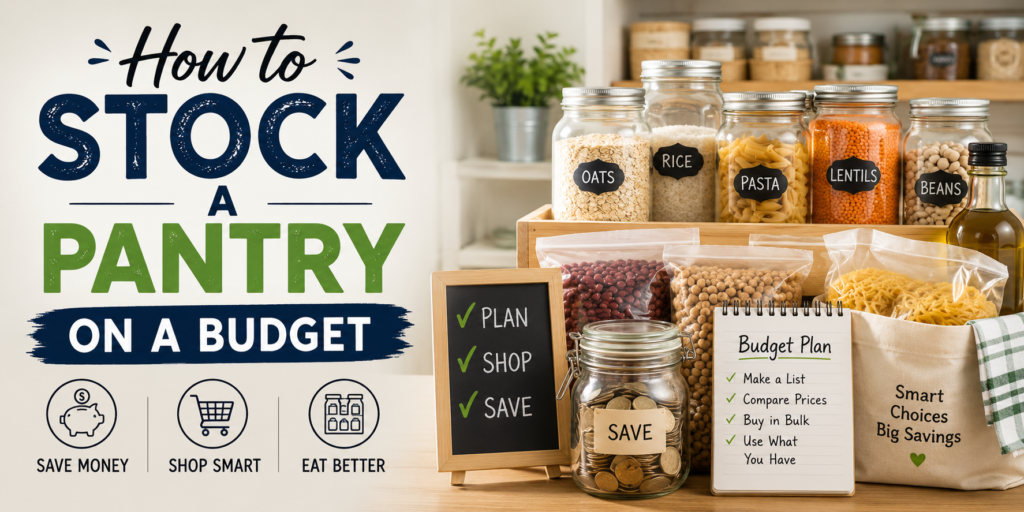
- Use transparent containers.
- Label every container.
- Store older products in front.
- Keep similar items together.
- Use airtight jars for grains and pulses.
A good organization saves both money and cooking time.
Step 10: Follow the FIFO Rule
FIFO stands for First In, First Out.
This means:
- Use older groceries first.
- Place newly purchased items behind existing stock.
- Regularly check expiry dates.
This simple system minimizes food waste.
Pantry Staples That Give the Best Value
These affordable ingredients can be used in dozens of recipes:
- Rice
- Wheat Flour
- Oats
- Lentils
- Chickpeas
- Rajma
- Pasta
- Poha
- Vermicelli
- Peanut Butter
- Tomato Puree
- Cooking Oil
- Spices
- Salt
- Sugar
Affordable Meal Ideas Using Pantry Staples
A stocked pantry makes everyday cooking simple.
Examples include:
- Dal Rice
- Khichdi
- Vegetable Pulao
- Rajma Chawal
- Chole Rice
- Pasta with Tomato Sauce
- Upma
- Poha
- Oats Porridge
- Besan Chilla
- Vegetable Fried Rice
- Lemon Rice
Most of these meals require only a few fresh ingredients.
Common Pantry Stocking Mistakes
Avoid these costly errors:
Buying Without a List
Impulse shopping increases spending.
Purchasing Too Much
Overbuying often leads to expired food.
Ignoring Expiry Dates
Always rotate your pantry stock.
Buying Trendy Foods
Purchase ingredients you’ll actually use.
Shopping While Hungry
This often results in unnecessary purchases.
Smart Ways to Save More on Grocery Shopping
- Create a weekly meal plan.
- Shop once a week instead of daily.
- Compare prices across stores.
- Use grocery shopping apps.
- Buy local products.
- Choose seasonal foods.
- Avoid processed convenience foods.
- Redeem loyalty points.
- Carry reusable shopping bags.
- Stick to your grocery list.
Pantry Checklist for Beginners
Grains
- Rice
- Atta
- Oats
- Pasta
- Sooji
Pulses
- Toor Dal
- Moong Dal
- Masoor Dal
- Rajma
- Chana
Oils
- Cooking Oil
- Ghee
Spices
- Turmeric
- Chili Powder
- Coriander Powder
- Garam Masala
- Cumin
Others
- Salt
- Sugar
- Tea
- Coffee
- Tomato Ketchup
- Vinegar
- Peanut Butter
Long-Term Benefits of a Budget Pantry
A pantry that is well stocked is really good for you. It does a lot more than just save you money. For one thing it helps you feel less stressed because you know you have all the ingredients you need. This means you can make meals at home. You also throw away food because everything is organized.. When something unexpected happens you are ready. If you keep your pantry organized all the time you will also get better at managing your money and buying groceries will be easier. A stocked pantry like this is really helpful for families. A stocked pantry is good, for your budget and a well stocked pantry helps you shop for groceries more efficiently.
Conclusion
Learning how to stock a pantry on a budget is one of the ways to save money while making daily cooking easier.
To do this you need to focus on the things that you really need to have in your pantry.
You have to plan the meals you want to make, shop for food in a way and keep your pantry organized.
This way you can have a supply of food without spending too much money on it.
Remember, stocking a pantry does not happen at once.
It takes time to get all the food you need.
So start with the things like flour and sugar.
Only buy the things you need and try to buy them when they’re on sale.
Also make sure to use the food before it goes bad.
If you do all these things you will start to see that you are spending money on food.
You will also throw away food and you will always have the things you need to make healthy meals for yourself and your family.
You will feel good knowing that you have a pantry that’s full of the things you need to cook.
Stocking a pantry is really about having a pantry that has all the food you need to make the meals you want to eat.
So focus on stocking your pantry with the food and you will be happy, with the way you are cooking and the money you are saving.
Frequently Asked Questions (FAQs)
1. What should I buy first when stocking a pantry on a budget?
Start with essentials like rice, wheat flour, lentils, cooking oil, salt, sugar, and basic spices. These ingredients form the foundation of many affordable meals.
2. Is buying groceries in bulk always cheaper?
Bulk buying can save money on frequently used, non-perishable items such as rice, flour, pulses, and oil. However, avoid buying large quantities of products you don’t use often or that have a short shelf life.
3. How can I reduce food waste in my pantry?
Keep an inventory, organize items using the First In, First Out (FIFO) method, store food in airtight containers, and regularly check expiration dates.
4. How much should I budget for pantry essentials each month?
The ideal budget depends on your household size and eating habits. A single person may spend ₹2,000–₹3,500, while a family of four may budget ₹6,000–₹10,000 or more for pantry staples.
5. What are the best budget-friendly pantry staples?
Affordable staples include rice, atta, oats, lentils, chickpeas, rajma, pasta, poha, semolina, spices, cooking oil, tea, coffee, and peanut butter. These ingredients are versatile, nutritious, and have a long shelf life.