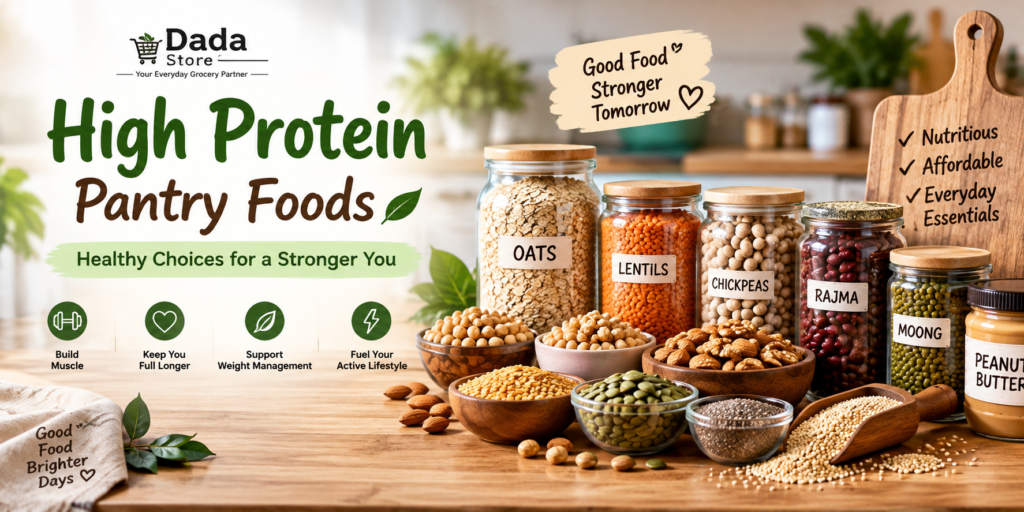
Looking for a High Protein Pantry Foods way to get more protein into your daily meals? You don’t always have to buy supplements or spend a lot of time cooking complicated meals. Your kitchen cupboard can be a place to find easy, cheap and protein-packed foods.
High protein pantry foods are items that can stay on the shelf for weeks or even months. They can be used in breakfasts, lunches, snacks and dinners. Things like lentils and chickpeas and also peanuts, seeds, oats and soy products are all examples of these kinds of foods. They help make it easier to create meals that’re balanced and healthy.
Having protein- foods in your home also makes shopping for groceries easier. With the ingredients on hand you can cook healthy meals quickly even when fresh items are not available.
In this guide we will look at the high-protein pantry foods. We will talk about the benefits of each one, how to store them some ideas, for meals and how to add them to your shopping list.
What Are High Protein Pantry Foods?
High protein pantry foods are protein-rich, shelf-stable foods that can be stored at room temperature under suitable conditions.
They are particularly useful for busy households because they don’t always require refrigeration before opening. Many can be purchased in bulk, making them practical additions to a monthly grocery list.
Examples include:
- Lentils and dals
- Chickpeas
- Kidney beans
- Black beans
- Soybeans
- Roasted chickpeas
- Peanuts
- Peanut butter
- Almonds
- Pumpkin seeds
- Sunflower seeds
- Chia seeds
- Flaxseeds
- Oats
- Soy chunks
- Quinoa
- Whole-grain cereals with added protein
The exact protein content varies by food, serving size, and brand, so checking the nutrition label is useful when comparing products.
Best High Protein Pantry Foods
1. Lentils and Dals
Lentils are among the most useful protein-rich pantry staples, especially for vegetarian households.
Common options include:
- Masoor dal
- Moong dal
- Chana dal
- Urad dal
- Toor dal
Dals can be used to prepare soups, curries, khichdi, dal tadka, and other everyday meals.
They are also convenient because dry lentils can be stored for an extended period when kept in a cool, dry place.
2. Chickpeas
Dry chickpeas, also called chana or kabuli chana, are versatile pantry ingredients.
You can soak and cook them for:
- Chana curry
- Chole
- Salads
- Homemade hummus
- Chaat
- Grain bowls
Roasted chickpeas can also work as a convenient crunchy snack.
For easier meal preparation, you can keep both dry chickpeas and canned chickpeas in your pantry. If using canned varieties, compare sodium levels and rinse them before use when appropriate.
3. Kidney Beans
Kidney beans, commonly known as rajma, are another useful pantry staple.
They can be used in:
- Rajma curry
- Rice bowls
- Salads
- Wrap fillings
- Bean-based soups
Dry kidney beans should be prepared properly according to food-safety guidance before eating. Once cooked, they can become a filling component of a balanced meal.
4. Soy Chunks
Soy chunks are a popular vegetarian protein option and are easy to store.
They can be added to:
- Curries
- Pulao
- Biryani-style dishes
- Stir-fries
- Wraps
- Sandwich fillings
Because they are lightweight and shelf-stable, soy chunks can be a practical addition to a high protein vegetarian pantry.
When purchasing packaged soy products, check the nutrition facts, ingredients, and serving size.
5. Peanuts
Peanuts are an affordable pantry food that provides protein and healthy fats.
They can be eaten as:
- Roasted snacks
- Peanut chutney
- Peanut-based sauces
- Toppings for salads
- Ingredients in homemade snack mixes
Choose unsalted or lightly salted varieties when you want greater control over sodium intake.
6. Peanut Butter
Peanut butter is an easy pantry staple for breakfast and snacks.
Try it with:
- Whole-grain toast
- Oatmeal
- Apples or bananas
- Smoothies
- Homemade energy bites
When buying peanut butter, compare labels and look for products with a simple ingredient list if that suits your dietary preferences. Some varieties contain added sugar, salt, or other ingredients.
7. Almonds
Almonds are convenient because they require no cooking and can be stored easily.
A small serving can be added to:
- Oatmeal
- Homemade trail mixes
- Yogurt
- Smoothies
- Breakfast bowls
Almonds provide protein along with unsaturated fats and other nutrients.
Because nuts are calorie-dense, portion size matters when you’re planning your overall diet.
8. Pumpkin Seeds
Pumpkin seeds are a useful pantry ingredient for adding protein and texture to meals.
You can sprinkle them over:
- Oatmeal
- Salads
- Soups
- Yogurt
- Smoothie bowls
They can also be included in homemade snack mixes.
Store seeds in an airtight container and protect them from heat and moisture to maintain quality.
9. Chia Seeds
Chia seeds are small but versatile.
They can be added to:
- Overnight oats
- Smoothies
- Porridge
- Homemade puddings
- Yogurt bowls
Chia seeds also provide fiber and healthy fats, making them a useful addition to a balanced pantry.
10. Quinoa
Quinoa is a versatile grain-like food that can be used as an alternative to rice or other grains.
It works well in:
- Protein bowls
- Salads
- Vegetable pulao
- Breakfast bowls
- Stuffed vegetables
Quinoa can be combined with beans, lentils, vegetables, and seeds to create a filling meal.
11. Oats
For a higher-protein breakfast, combine oats with ingredients such as:
Oats are best known as a breakfast food, but they can be used in many different recipes.
- Peanut butter
- Seeds
- Nuts
- Milk
- Yogurt
- Soy-based ingredients
Plain oats are generally preferable to relying on highly sweetened flavored varieties if you’re trying to control added sugar.
12. Roasted Chana
Roasted chana is a simple and convenient snack for Indian households.
It can be eaten on its own or combined with:
- Peanuts
- Seeds
- Spices
- Dried ingredients
A homemade roasted snack mix can be portioned into small containers for quick snacks throughout the week.
Why Keep High Protein Foods in Your Pantry?
Maintaining a selection of protein-rich pantry foods can offer several practical benefits.
1. Convenient Meal Preparation
When protein staples are already available, you can prepare meals without making an extra grocery trip.
2. Budget-Friendly Options
Dry beans, lentils, peas, and grains can often be purchased in larger quantities, potentially making them economical household staples.
3. Longer Storage
Many dry pantry foods have a long shelf life when stored properly.
4. Vegetarian-Friendly Choices
Lentils, beans, soy, nuts, seeds, and grains provide several options for people following vegetarian eating patterns.
5. Meal Variety
Having different protein sources available makes it easier to avoid eating the same meals repeatedly.
How to Build a High Protein Pantry
A well-organized protein pantry doesn’t need to contain dozens of products.
Start with a few foods from different categories.
Legumes
Keep:
- Masoor dal
- Moong dal
- Chana dal
- Chickpeas
- Rajma
Soy-Based Foods
Consider:
- Soy chunks
- Dried soybeans
- Shelf-stable soy products where appropriate
Nuts and Seeds
Stock:
- Peanuts
- Almonds
- Pumpkin seeds
- Chia seeds
- Flaxseeds
- Sunflower seeds
Grains
Consider:
- Oats
- Quinoa
- Whole grains
Convenient Snacks
Keep:
- Roasted chana
- Unsalted nuts
- Homemade seed mixes
This gives you a variety of ingredients without overcrowding your pantry.
High Protein Pantry Foods for Breakfast
Breakfast is an easy opportunity to add more protein.
Protein-Rich Oatmeal
Prepare oats with milk or a suitable milk alternative and add peanut butter, chia seeds, and nuts.
Peanut Butter Toast
Spread peanut butter over whole-grain toast and add sliced fruit for a quick breakfast.
Chana Breakfast Bowl
Use cooked chickpeas with vegetables, spices, and whole grains to create a savory breakfast.
Overnight Oats
Combine oats with yogurt or milk and add chia seeds and nuts. Refrigerate overnight and add fruit before serving.
High Protein Pantry Foods for Lunch and Dinner
Pantry staples can form the foundation of many satisfying meals.
Dal and Rice
Combine dal with rice and vegetables for a simple everyday meal.
Rajma Bowl
Combine cooked rajma with rice or another whole grain and vegetables.
Chickpea Salad
Mix chickpeas with vegetables, herbs, and a simple dressing.
Soy Chunk Curry
Cook hydrated soy chunks with vegetables and spices and serve with roti or rice.
Quinoa and Bean Bowl
Combine quinoa, beans, vegetables, seeds, and a suitable dressing.
High Protein Pantry Snacks
Instead of reaching for highly processed snacks every time you’re hungry, keep simple pantry options available.
Some ideas include:
- Roasted chana
- Roasted peanuts
- Almonds
- Pumpkin seeds
- Homemade trail mix
- Peanut butter with fruit
- Oat and nut snack bars made at home
For packaged snacks, compare nutrition labels rather than assuming that a product marketed as “high protein” is automatically a healthy choice.
How to Store Protein-Rich Pantry Foods
Proper storage helps maintain food quality and reduce waste.
Use Airtight Containers
Transfer opened dry foods into clean, airtight containers when practical.
Keep Foods Dry
Moisture can damage grains, lentils, seeds, and other dry foods.
Store Away From Heat
Keep pantry staples away from direct sunlight and excessive heat.
Check Expiration and Best-Before Dates
Rotate older products toward the front and use newer purchases behind them.
Watch for Pests
Inspect dry grains, pulses, and flour periodically for signs of infestation.
Refrigerate Certain Foods
Some foods, particularly natural nut butters, nuts, seeds, and opened products, may benefit from refrigeration depending on the product’s label and storage instructions.
Always follow the manufacturer’s storage instructions.
High Protein Pantry Shopping List
Here’s a simple shopping list you can use when planning your next grocery trip:
Pulses and Legumes
- Moong dal
- Masoor dal
- Chana dal
- Toor dal
- Chickpeas
- Rajma
Nuts and Seeds
- Peanuts
- Almonds
- Pumpkin seeds
- Chia seeds
- Flaxseeds
- Sunflower seeds
Grains
- Oats
- Quinoa
- Brown rice
- Other whole grains
Soy Foods
- Soy chunks
- Dried soybeans
Convenient Foods
- Roasted chana
- Natural peanut butter
- Low-sugar pantry snack options
Tips for Buying High Protein Pantry Foods
When shopping for protein-rich pantry products, don’t focus only on the word “protein.”
Consider these factors:
Read the Nutrition Label
Look at protein per serving as well as calories, added sugar, sodium, fiber, and fat.
Compare Products
Two products in the same category can have significantly different nutritional profiles.
Check Ingredients
A shorter, straightforward ingredient list can make it easier to understand what you’re buying.
Choose According to Your Diet
Your pantry should reflect your dietary preferences, allergies, budget, and cooking habits.
Buy What You Will Actually Use
Buying large quantities isn’t economical if the food eventually gets wasted.
How to Combine Pantry Foods for Balanced Meals
A high-protein pantry works best when protein foods are combined with other nutritious ingredients.
For example:
Dal + rice + vegetables
A familiar combination that can provide protein, carbohydrates, fiber, and micronutrients.
Chickpeas + whole grains + vegetables
Useful for salads, bowls, or wraps.
Oats + nuts + seeds + yogurt
A convenient breakfast combination.
Rajma + rice + vegetables
A practical lunch or dinner option.
Soy chunks + vegetables + roti
A protein-focused vegetarian meal.
The goal isn’t simply to maximize protein. A balanced eating pattern should include a variety of foods and nutrients.
Common Mistakes When Buying Protein Pantry Foods
Buying Based Only on Marketing Claims
Words such as “protein-rich” or “healthy” don’t tell you everything about a product. Read the nutrition panel.
Ignoring Serving Size
Protein numbers are usually listed per serving. Check how much the stated serving actually represents.
Buying Too Much
Bulk buying can save money, but only if you use the food before its quality declines.
Forgetting Variety
Eating one protein source repeatedly can make meals boring. Rotate between pulses, beans, soy, nuts, seeds, and grains.
Poor Storage
Improper storage can lead to moisture, pests, spoilage, and food waste.
High Protein Pantry Foods: A Simple Weekly Approach
You don’t need to create complicated meal plans.
Try this simple approach:
Monday: Moong dal with rice and vegetables
Tuesday: Chickpea salad with whole grains
Wednesday: Soy chunk curry with roti
Thursday: Rajma with rice
Friday: Dal khichdi with vegetables
Saturday: Quinoa and chickpea bowl
Sunday: Mixed lentil curry with roti
Breakfasts and snacks can include oats, peanut butter, nuts, seeds, and roasted chana.
This approach provides variety while making use of ingredients already available in your pantry.
Final Thoughts
Building a pantry that focuses on high protein pantry foods can make everyday meal planning more convenient, flexible and practical. Lentils, beans, chickpeas, soy products, nuts, seeds, oats and quinoa can give you a range of options for breakfasts, snacks, lunches and dinners.
The best pantry is not necessarily the one, with the products. The best pantry is the one stocked with ingredients that fit your budget, your dietary needs, your cooking habits and your lifestyle.
Start with a few staples. Store them properly. Check nutrition labels when you buy packaged foods. Gradually expand your selection as you discover what your household enjoys.
Whether you are creating a grocery list or simply trying to make healthier meals at home, a well‑planned protein pantry can be a valuable part of your everyday kitchen.
FAQs
1. What are the best high protein pantry foods?
Some useful options include lentils, chickpeas, kidney beans, soy chunks, peanuts, almonds, pumpkin seeds, chia seeds, oats, and quinoa. Protein content varies by food and serving size.
2. What are high protein vegetarian pantry foods?
Vegetarian pantry options include dals, chickpeas, kidney beans, soy chunks, soybeans, peanuts, nuts, seeds, quinoa, and oats.
3. Are lentils good high protein pantry foods?
Yes. Lentils are versatile, shelf-stable when stored properly, and can be used in many everyday meals. They also provide fiber and other nutrients.
4. How can I add more protein to breakfast using pantry foods?
You can add peanut butter, nuts, seeds, oats, or other protein-rich ingredients to breakfasts such as oatmeal, toast, smoothies, and breakfast bowls.
5. How should high protein pantry foods be stored?
Most dry pulses, grains, and seeds should be stored in clean, dry, airtight containers away from heat and moisture. Always follow the storage instructions on packaged foods.