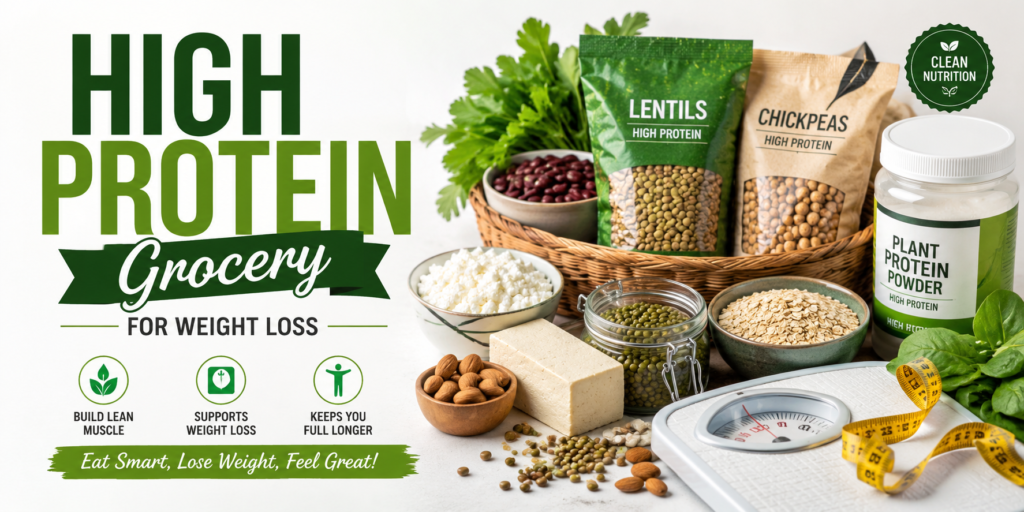
High Protein Grocery Foods for Weight Loss doesn’t mean eating less—it means eating smarter. One of the most effective ways to stay full, reduce cravings, and preserve lean muscle while losing fat is by adding high protein grocery foods to your daily meals. Protein takes longer to digest than carbohydrates, helping you feel satisfied for longer and making it easier to manage your calorie intake.
Whether you’re planning for weekly grocery shopping or looking to build a healthier pantry, choosing protein-rich foods can make your weight loss journey easier and more sustainable. This guide covers the best high-protein grocery items, shopping tips, meal ideas, and frequently asked questions to help you make informed choices.
Why Protein Is Important for Weight Loss
Protein plays a vital role in healthy weight management because it:
- Keeps you full for longer
- Helps reduce unhealthy snacking
- Supports muscle growth and maintenance
- Increases calorie burning through digestion
- Stabilizes blood sugar levels
- Supports faster recovery after exercise
Experts generally recommend including a protein source in every meal to maximize these benefits.
Best High Protein Grocery Foods for Weight Loss
1. Lentils (Dal)
Lentils are among the healthiest and most affordable protein sources available.
Benefits:
- High in protein
- Rich in fiber
- Supports digestion
- Keeps you full for hours
Popular varieties include:
- Moong Dal
- Masoor Dal
- Toor Dal
- Urad Dal
- Chana Dal
Protein: 18g per cooked cup
2. Chickpeas (Chana)
Chickpeas are versatile and perfect for healthy meals.
You can enjoy them as:
- Salads
- Roasted snacks
- Curry
- Homemade hummus
Protein: 15g per cooked cup
3. Kidney Beans (Rajma)
Rajma provides both protein and fiber, making it ideal for weight loss.
Benefits include:
- Long-lasting energy
- Better digestion
- Improved satiety
Protein: 15g per cooked cup
4. Black Beans
Black beans are packed with nutrients and work well in:
- Soups
- Rice bowls
- Burritos
- Salads
Protein: 15g per cooked cup
5. Soy Chunks
Soy chunks are one of the richest vegetarian protein sources.
Why they’re great:
- Extremely high protein
- Low fat
- Budget-friendly
- Easy to cook
Protein: Around 52g per 100g (dry)
6. Tofu
Made from soybeans, tofu is excellent for healthy eating.
Use it in:
- Stir-fries
- Salads
- Sandwiches
- Curry
Protein: 10–15g per serving
7. Paneer (Low-Fat)
Low-fat paneer offers protein while reducing saturated fat intake.
Choose homemade or low-fat varieties whenever possible.
Protein: Around 18g per 100g
8. Greek Yogurt
Greek yogurt contains almost twice the protein of regular yogurt.
Benefits:
- Supports gut health
- Rich in calcium
- Excellent breakfast option
Add:
- Fresh fruits
- Chia seeds
- Nuts
Protein: 15–20g per cup
9. Milk
Low-fat milk provides quality protein and essential nutrients.
Perfect for:
- Smoothies
- Oats
- Protein shakes
Protein: 8g per cup
10. Oats
Although mainly known as a whole grain, oats also contribute protein.
Pair them with:
- Milk
- Yogurt
- Nuts
- Seeds
Protein: 6g per serving
11. Peanut Butter (Natural)
Natural peanut butter provides protein and healthy fats.
Choose products without:
- Added sugar
- Hydrogenated oils
Enjoy in moderation.
Protein: 8g per 2 tablespoons
12. Almonds
Almonds are nutritious and filling.
Benefits:
- Healthy fats
- Protein
- Vitamin E
- Magnesium
Protein: 6g per ounce
13. Pumpkin Seeds
These tiny seeds are protein powerhouses.
Sprinkle them on:
- Salads
- Oats
- Smoothie bowls
- Yogurt
Protein: 8g per ounce
14. Chia Seeds
Chia seeds provide:
- Protein
- Fiber
- Omega-3 fats
They’re ideal for:
- Overnight oats
- Smoothies
- Yogurt
Protein: 5g per ounce
15. Quinoa
Quinoa is a complete plant protein containing all nine essential amino acids.
Use it instead of:
- Rice
- Pasta
Protein: 8g per cooked cup
Healthy Grocery Shopping Tips for Weight Loss
To build a weight-loss-friendly shopping cart:
- Read nutrition labels carefully.
- Compare protein content before buying.
- Choose foods with minimal added sugar.
- Pick whole grains over refined grains.
- Buy fresh vegetables every week.
- Include legumes in your monthly pantry.
- Prefer low-fat dairy options.
- Avoid heavily processed packaged snacks.
- Stock healthy protein-rich snacks at home.
- Plan meals before shopping to avoid impulse purchases.
Sample High Protein Grocery Shopping List
Pantry
- Lentils
- Chickpeas
- Rajma
- Black beans
- Soy chunks
- Oats
- Quinoa
- Peanut butter
Dairy
- Greek yogurt
- Low-fat paneer
- Low-fat milk
Seeds & Nuts
- Almonds
- Pumpkin seeds
- Chia seeds
- Flaxseeds
Fresh Produce
- Spinach
- Broccoli
- Bell peppers
- Tomatoes
- Cucumbers
- Carrots
- Mushrooms
Easy High Protein Meal Ideas
Breakfast
- Greek yogurt with fruits and chia seeds
- Oats cooked with milk and almonds
- Tofu vegetable scramble
Lunch
- Rajma with brown rice
- Dal with whole wheat roti
- Chickpea salad
Evening Snack
- Roasted chana
- Almonds
- Peanut butter on whole-grain toast
Dinner
- Tofu stir-fry
- Quinoa vegetable bowl
- Low-fat paneer curry with salad
Common Mistakes to Avoid
Many people unknowingly slow down their weight loss progress by:
- Eating too little protein
- Choosing sugary protein bars
- Drinking high-calorie protein beverages
- Skipping vegetables
- Ignoring portion sizes
- Relying only on processed “high-protein” foods
- Not drinking enough water
Balance is key. Combine protein with fiber-rich vegetables and whole grains for the best results.
Benefits of High Protein Grocery Foods
Adding more protein-rich grocery items to your diet can help:
- Support healthy weight loss
- Improve muscle recovery
- Increase fullness after meals
- Reduce cravings
- Maintain lean muscle
- Improve metabolism
- Provide sustained energy throughout the day
Frequently Asked Questions (FAQs)
1. What are the best high protein grocery foods for weight loss?
Some of the best options include lentils, chickpeas, soy chunks, tofu, low-fat paneer, Greek yogurt, quinoa, oats, almonds, pumpkin seeds, and peanut butter.
2. How much protein should I eat daily for weight loss?
Protein needs vary based on age, weight, and activity level. Many adults aiming for weight loss benefit from approximately 1.2–1.6 grams of protein per kilogram of body weight, but it’s best to personalize this with a healthcare professional or dietitian.
3. Are vegetarian protein foods enough for weight loss?
Yes. Foods like lentils, beans, soy products, dairy, quinoa, nuts, and seeds provide plenty of protein and can support healthy weight loss when combined with a balanced diet.
4. Can I lose weight without protein supplements?
Absolutely. Most people can meet their protein needs through whole foods such as legumes, dairy, soy products, nuts, seeds, and whole grains without relying on supplements.
5. Which grocery snacks are high in protein?
Healthy choices include roasted chickpeas, roasted chana, Greek yogurt, almonds, peanuts, pumpkin seeds, and natural peanut butter with whole-grain toast.
Final Thoughts
Choosing the high protein foods when you go shopping can make eating healthy a lot easier. If you have foods like lentils and low-fat dairy in your kitchen you can make meals that’re good for you and fill you up.
High protein foods like soy products and nuts are also very good for you. Legumes and seeds are good too.
When you want to lose weight it is not about cutting out foods you like, it is about making choices when you buy groceries. You should make a list of the foods you want to buy and try to buy them.
Remember to include protein foods in every meal. This will help you be healthy and fit for a time. High protein foods are important for your health and fitness goals.