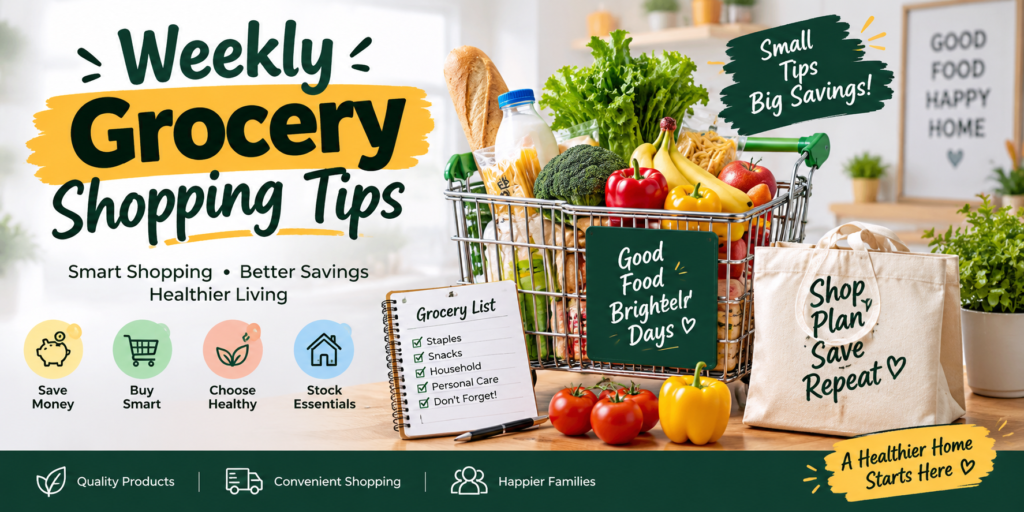
Weekly grocery shopping can quickly become expensive and stressful when you shop without a plan. Buying items or forgetting essential ingredients can raise your grocery bill and create food waste. A simple and organized weekly grocery shopping plan can help you control spending, choose foods and make your weekly grocery shopping trip faster and easier.
Whether you shop at a grocery store, a supermarket or an online grocery store having a clear list and a budget can make a big difference. In this guide you will learn weekly grocery shopping tips to plan your meals, create a smart grocery list compare prices avoid impulse purchases and make the most of your budget.
1. Plan Your Meals Before Shopping
One of the easiest ways to make weekly grocery shopping more efficient is to plan your meals in advance.
Before creating your grocery list, decide what you and your family will eat throughout the week. Consider breakfast, lunch, dinner, and snacks.
For example:
- Monday: Dal, rice, and vegetables
- Tuesday: Roti, paneer, and salad
- Wednesday: Vegetable pulao and curd
- Thursday: Dal, roti, and seasonal vegetables
- Friday: Pasta and vegetables
- Saturday: Khichdi and curd
- Sunday: A family meal of your choice
Meal planning helps you purchase only what you actually need. It also reduces last-minute food orders and prevents unnecessary grocery purchase.
2. Check Your Pantry and Refrigerator First
Before heading to the grocery store, take a few minutes to check what you already have at home.
Look inside:
- Kitchen cabinets
- Pantry shelves
- Refrigerator
- Freezer
- Spice storage
- Grocery containers
Make a note of products that are running low and avoid buying items you already have in sufficient quantities.
For example, if you already have two packets of rice, you may not need another packet this week. However, if your cooking oil, flour, or pulses are nearly finished, add them to your list.
This simple habit can help reduce food waste and unnecessary grocery expenses.
3. Create a Weekly Grocery List
A grocery list keeps your shopping organized and helps you stay focused.
Instead of writing products randomly, divide your list into categories such as:
Fruits & Vegetables
- Apples
- Bananas
- Tomatoes
- Potatoes
- Onions
- Leafy vegetables
Grains & Staples
- Wheat flour
- Rice
- Oats
- Poha
- Semolina
Pulses & Protein Foods
- Dal
- Chickpeas
- Rajma
- Paneer
- Nuts and seeds
Dairy
- Milk
- Curd
- Butter
- Cheese
Household Essentials
- Dishwashing liquid
- Laundry detergent
- Cleaning products
- Tissues
A categorized list makes it easier to find products and reduces the chances of forgetting important items.
4. Set a Grocery Budget
Creating a weekly grocery budget is an important part of smart shopping.
Decide how much you can comfortably spend before visiting the store. Your budget should consider household size, dietary needs, and essential expenses.
For example, you might divide your grocery budget into:
| Category | Example Budget |
| Fruits & Vegetables | ₹800 |
| Grains & Pulses | ₹700 |
| Dairy | ₹400 |
| Snacks & Breakfast | ₹400 |
| Household Items | ₹300 |
| Total | ₹2,600 |
The exact amount will vary depending on your household and location.
Tracking your weekly grocery spending can also help you identify where most of your money goes.
5. Buy Seasonal Fruits and Vegetables
Seasonal produce can be a practical choice for weekly grocery shopping.
When fruits and vegetables are in season, they are often widely available and may offer better value than out-of-season alternatives.
Before shopping, check which vegetables and fruits are commonly available during the current season. You can then build your weekly meals around them.
Buying seasonal produce also adds variety to your meals and can make meal planning more interesting.
6. Compare Prices Before Buying
Prices can vary between brands, stores, and product sizes. Comparing prices before purchasing can help you make informed decisions.
Check:
- Price per unit
- Pack size
- Brand
- Discounts
- Offers
- Product quality
- Expiry date
Don’t automatically choose the largest package simply because it appears cheaper. Calculate the price per kilogram, litre, or unit when comparing different pack sizes.
For example, a 5 kg bag may have a lower price per kilogram than a 1 kg package, but only buy larger quantities when you are confident you will use them before they expire.
7. Avoid Impulse Buying
Impulse purchases are one of the biggest challenges during grocery shopping.
Bright packaging, discounts, and attractive displays can encourage shoppers to buy products that weren’t on their original list.
Before adding an unplanned product to your cart, ask yourself:
“Do I really need this this week?”
If the answer is no, consider leaving it for your next shopping trip.
This simple rule can help you stay closer to your grocery budget.
8. Don’t Shop When You’re Extremely Hungry
Shopping while very hungry can make it harder to stick to a grocery list.
You may be more tempted to purchase snacks, sweets, ready-to-eat foods, or other unnecessary products.
Having a meal or light snack before grocery shopping can help you focus on your planned purchases.
It is a small habit, but it can make weekly grocery shopping more controlled.
9. Check Expiry Dates
Always check expiry or best-before dates, especially for packaged foods, dairy products, sauces, cereals, and other items that may stay in your pantry for several days or weeks.
When buying multiple products, use the first-in, first-out (FIFO) approach at home.
Place older products toward the front of your pantry and newer products behind them. This encourages you to use older items first and can reduce food waste.
10. Buy in Bulk—But Only When It Makes Sense
Buying in bulk can sometimes reduce the cost per unit, but bulk buying isn’t always the best option.
Bulk purchases can make sense for frequently used, long-lasting products such as:
- Rice
- Wheat flour
- Pulses
- Sugar
- Salt
- Cooking oil
- Cleaning supplies
However, avoid buying large quantities of perishable foods unless you know your household can consume them quickly.
The goal isn’t to buy the largest quantity. The goal is to buy the right quantity at a reasonable price.
11. Choose Store Brands When Appropriate
Many supermarkets offer their own store-brand products. These may be worth comparing with well-known brands, particularly for basic household and pantry products.
When comparing products, don’t focus only on the brand name. Check:
- Ingredients
- Quantity
- Quality
- Nutritional information
- Price
- Customer reviews where relevant
Choosing products based on value rather than branding can help manage your weekly grocery budget.
12. Use Online Grocery Shopping Strategically
Online grocery shopping can make weekly shopping convenient, particularly when you already know what you need.
Create your grocery list first and then search for the products.
Online shopping can make it easier to:
- Compare prices
- Review your cart
- Remove unnecessary products
- Check available offers
- Avoid crowded stores
- Reorder frequently purchased essentials
However, always check delivery charges, minimum order requirements, and final cart value before placing your order.
13. Organize Your Grocery Shopping by Priority
Not every grocery item has the same level of importance.
Divide your list into three groups:
Essential
Products you need immediately, such as milk, flour, rice, vegetables, and cooking oil.
Useful
Products that are helpful but can wait if your budget is limited.
Optional
Snacks, treats, specialty products, or items you don’t regularly use.
If your cart becomes too expensive, remove optional products first rather than cutting necessary household staples.
14. Store Groceries Properly After Shopping
Smart grocery shopping doesn’t end when you leave the store.
Once you get home, organize your purchases properly.
Keep:
- Dry groceries in clean, airtight containers
- Fruits and vegetables according to their storage needs
- Dairy products refrigerated
- Frozen foods in the freezer
- Cleaning products away from food
Proper storage can help preserve food quality and reduce waste.
15. Review Your Grocery Spending Every Week
At the end of each week, take a few minutes to review your grocery expenses.
Ask:
- Did I stay within my budget?
- Which products cost the most?
- Did I buy anything unnecessary?
- Did we waste any food?
- Which items should I buy less of?
- Which essentials should I add to next week’s list?
This weekly review can help you gradually develop a more efficient grocery shopping routine.
Simple Weekly Grocery Shopping Checklist
Before shopping:
☐ Check your pantry
☐ Check your refrigerator
☐ Plan weekly meals
☐ Create a grocery list
☐ Set a budget
☐ Check available offers
☐ Compare important prices
While shopping:
☐ Follow your list
☐ Check expiry dates
☐ Compare pack sizes
☐ Avoid unnecessary purchases
☐ Choose seasonal produce
☐ Track your spending
After shopping:
☐ Store food correctly
☐ Use older products first
☐ Organize your pantry
☐ Review your spending
☐ Note items needed for next week
FAQs About Weekly Grocery Shopping
1. How can I save money on weekly grocery shopping?
Create a meal plan, make a shopping list, set a budget, compare prices, choose seasonal produce, and avoid impulse purchases. Buying appropriate quantities can also help reduce food waste.
2. What should I include in a weekly grocery list?
A basic weekly grocery list can include fruits, vegetables, grains, pulses, dairy products, breakfast foods, snacks, cooking essentials, and household necessities. Customize it according to your family’s needs.
3. Is it cheaper to buy groceries in bulk?
Bulk buying can be economical for frequently used, long-lasting products. However, it may not save money if products expire before you use them. Always consider price per unit and consumption.
4. How can I avoid impulse purchases at the grocery store?
Make a list before shopping and stick to it. Set a spending limit and ask yourself whether an unplanned item is genuinely needed before putting it in your cart.
5. Is online grocery shopping good for weekly shopping?
Yes. Online grocery shopping can make it easier to compare prices, review your cart, and avoid some impulse purchases. However, check delivery fees, offers, and the final order value before checkout.