A healthy lifestyle does not need diets, expensive superfoods or complicated fitness routines. In cases it starts with small everyday choices—what you eat, how much you move, how well you sleep and how consistently you stick to good habits.
Healthy lifestyle and nutrition go hand in hand. The foods you eat give your body energy and the nutrients it needs. Regular physical activity, sleep, staying hydrated and managing stress all help support your overall well-being.
For families building habits can begin with something simple, like a better grocery list. Choosing grains, pulses, nuts, seeds, vegetables, fruits, healthy cooking oils and nutritious snacks can make everyday meals more balanced and nourishing.
This guide explains the basics of eating and nutrition. It covers the food groups your body needs. It also shows how to make a grocery list, offers practical meal-planning tips and shares simple lifestyle habits that can support long-term wellness.
What Is a Healthy Lifestyle?
A healthy lifestyle is a combination of habits that support physical and mental well-being. Nutrition is an important part of it, but it is not the only factor.
A balanced healthy lifestyle generally includes:
- Eating a variety of nutritious foods
- Staying physically active
- Drinking enough water
- Getting adequate sleep
- Managing stress
- Limiting highly processed foods
- Maintaining good personal hygiene
- Avoiding tobacco and excessive alcohol
- Building sustainable daily routines
The goal is not perfection. A healthy lifestyle is about making realistic choices consistently.
For example, replacing sugary drinks with water, adding vegetables to lunch and dinner, choosing whole grains more often, and keeping nutritious snacks at home are small changes that can become long-term habits.
Why Is Nutrition Important for a Healthy Lifestyle?
Nutrition provides the body with the nutrients required for energy, growth, repair, and normal body functions.
The body needs different nutrients in different amounts. These include carbohydrates, proteins, fats, vitamins, minerals, fiber, and water.
A nutritious eating pattern can help you:
- Meet daily nutrient requirements
- Maintain energy throughout the day
- Support normal body functions
- Maintain healthy bones and muscles
- Support digestive health
- Maintain a healthy body weight
- Build sustainable eating habits
No single food provides every nutrient the body needs. This is why balanced nutrition focuses on eating a variety of foods rather than depending on one particular ingredient.
The Essential Components of a Balanced Diet
A balanced diet contains a variety of foods in appropriate amounts. Your exact nutritional needs depend on factors such as age, activity level, individual health needs, and lifestyle.
1. Whole Grains
Whole grains can be an important part of a nutritious diet because they contain more of the naturally occurring grain components than refined grains.
Common grocery options include:
- Whole wheat atta
- Oats
- Brown rice
- Barley
- Millets
- Whole-grain cereals
- Quinoa
Instead of completely eliminating carbohydrates, focus on choosing nutritious carbohydrate sources and appropriate portions.
For everyday grocery shopping, compare labels when purchasing packaged grain products and look for options with higher fiber and lower added sugar when appropriate.
2. Protein-Rich Foods
Protein is an essential nutrient involved in maintaining and repairing body tissues.
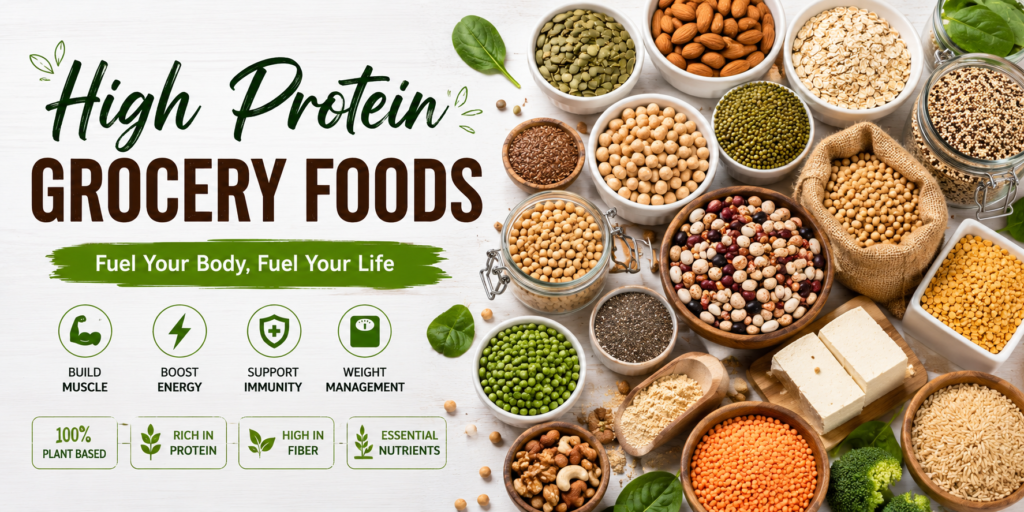
Vegetarian and plant-based grocery options include:
- Dal
- Chickpeas
- Rajma
- Black beans
- Soybeans
- Tofu
- Paneer
- Milk
- Curd
- Nuts
- Seeds
- Peanut butter
Including a protein source in meals can help create satisfying and nutritionally balanced meals.
For example, a simple meal could combine whole wheat roti, dal, vegetables, and curd.
3. Fruits and Vegetables
Fruits and vegetables provide important vitamins, minerals, fiber, and other naturally occurring compounds.
Try to include a variety of colors and types rather than eating the same few vegetables every day.
Useful grocery choices include:
Vegetables
- Carrots
- Spinach
- Broccoli
- Cauliflower
- Tomatoes
- Bell peppers
- Beans
- Cabbage
- Cucumber
- Pumpkin
Fruits
- Apples
- Bananas
- Oranges
- Guava
- Papaya
- Berries
- Watermelon
- Pears
Fresh, frozen, and appropriately stored produce can all be useful choices depending on availability and budget.
4. Healthy Sources of Fat
Fat is an essential nutrient and plays several roles in the body. The type and overall amount of fat matter.
Common sources of unsaturated fats include:
- Almonds
- Walnuts
- Peanuts
- Flaxseeds
- Chia seeds
- Sesame seeds
- Avocado
- Vegetable oils
Rather than focusing on eliminating all fats, make thoughtful choices about the types of fats included in your regular meals.
Remember that oils, nuts, and seeds are nutrient-rich but energy-dense, so portion awareness is useful.
5. Dairy and Alternatives
Milk, curd, paneer, and other dairy products can contribute nutrients such as protein and calcium.
For people who do not consume dairy, fortified alternatives may provide useful nutrients depending on the product.
When purchasing packaged products, check the nutrition label for added sugar, protein, calcium, and other nutrients relevant to your dietary needs.
6. Fiber-Rich Foods
Fiber is an important part of a healthy eating pattern.
Foods that can contribute dietary fiber include:
- Whole grains
- Oats
- Beans
- Lentils
- Chickpeas
- Vegetables
- Fruits
- Nuts
- Seeds
A simple way to increase fiber intake is to gradually add more vegetables, fruits, legumes, and whole grains to meals.
When increasing fiber, adequate fluid intake is also important.
How to Build a Healthy Grocery List
Healthy eating often starts before cooking—it starts while shopping.
Instead of entering a grocery store without a plan, create a weekly list based on the meals your household expects to prepare.
A practical healthy grocery list can include:
Grains and Staples
- Whole wheat atta
- Oats
- Brown rice
- Millets
- Barley
Pulses and Protein Foods
- Moong dal
- Masoor dal
- Chana dal
- Rajma
- Chickpeas
- Soy products
- Paneer or curd
Fruits
- Apples
- Bananas
- Guava
- Papaya
- Oranges
- Seasonal fruits
Vegetables
- Leafy greens
- Carrots
- Tomatoes
- Cucumber
- Broccoli
- Cauliflower
- Beans
Nuts and Seeds
- Almonds
- Walnuts
- Peanuts
- Chia seeds
- Flaxseeds
Kitchen Essentials
- Cooking oil
- Spices
- Herbs
- Low-sugar pantry options
- Healthy breakfast ingredients
A planned list can also reduce unnecessary purchases and make meal preparation easier.
Healthy Eating Habits for Busy Families
Busy schedules can make healthy eating challenging, but simple preparation can help.
Plan Meals in Advance
Spend a few minutes each week deciding what meals you are likely to prepare.
Planning can help you identify what needs to be purchased and reduce last-minute dependence on convenience foods.
Keep Healthy Staples Available
Stock your pantry with versatile foods such as:
- Oats
- Dal
- Rice
- Whole wheat flour
- Beans
- Nuts
- Seeds
- Spices
Keep fruits and vegetables readily available when possible.
Prepare Ingredients Ahead
Washing vegetables, cooking pulses, or preparing basic ingredients ahead of time can make weekday meals easier.
Make Healthy Snacks Convenient
Instead of keeping only packaged snacks within easy reach, consider options such as:
- Fresh fruit
- Roasted chickpeas
- Unsalted nuts
- Curd
- Homemade snacks
- Vegetable sticks
Convenience matters. Foods that are easy to access are more likely to become part of everyday routines.
Healthy Breakfast Ideas
Breakfast can be a convenient opportunity to include nutritious foods.
Some simple ideas include:
Oats With Fruit and Nuts
Combine oats with milk or a suitable alternative and add fruit and a small portion of nuts or seeds.
Vegetable Poha
Poha can be prepared with vegetables and spices for a simple breakfast.
Vegetable Upma
Add vegetables to upma and pair it with a protein-rich side when appropriate.
Whole-Wheat Roti With Curd
A simple traditional meal can be part of a balanced eating pattern when portions and overall food choices are appropriate.
Fruit and Curd Bowl
Plain curd with fresh fruit and seeds can provide a combination of protein, carbohydrates, and other nutrients.
Healthy Lunch and Dinner Choices
A balanced meal does not have to be complicated.
A simple plate can include:
- A whole-grain or other nutritious carbohydrate source
- A protein-rich food
- Plenty of vegetables
- A suitable source of healthy fat
- Water or another appropriate low-sugar beverage
For example:
Lunch: Roti + dal + mixed vegetables + curd
Dinner: Rice or roti + rajma/chickpeas + vegetables + salad
The ideal meal composition can vary according to individual dietary needs and preferences.
Smart Snacking for a Healthy Lifestyle
Snacking can fit into a healthy eating pattern. The key is choosing foods that provide useful nutrients and paying attention to portions.
Some options include:
- Fresh fruit
- Roasted chana
- Nuts
- Seeds
- Plain curd
- Homemade vegetable snacks
- Whole-grain options
Packaged snacks can also be consumed occasionally, but reading nutrition labels can help you compare products.
Look for information such as:
- Serving size
- Added sugar
- Sodium
- Saturated fat
- Fiber
- Protein
- Total calories
Remember that a product marketed as “healthy” is not automatically the best choice. The nutrition label provides more useful information than marketing claims alone.
Hydration and Healthy Living
Water is essential for normal body functions.
Daily fluid requirements vary depending on factors such as climate, physical activity, diet, and individual circumstances.
In hot weather or during physical activity, fluid needs may increase.
Easy hydration habits include:
- Carrying a reusable water bottle
- Drinking water regularly throughout the day
- Choosing water instead of sugary beverages more often
- Including water-rich foods such as fruits and vegetables
Tea, coffee, milk, and other beverages can contribute to fluid intake, although their nutritional and caffeine content varies.
Physical Activity and Nutrition Work Together
Nutrition is only one part of a healthy lifestyle.
Regular physical activity supports overall health and can complement nutritious eating habits.
Activities can include:
- Walking
- Cycling
- Dancing
- Swimming
- Strength exercises
- Yoga
- Recreational sports
The best activity is one that fits your lifestyle and that you can perform safely and consistently.
If you are beginning a new exercise program, especially if you have an existing medical condition, consider discussing appropriate activity with a qualified healthcare professional.
The Importance of Sleep
Sleep is another important part of a healthy lifestyle.
Poor sleep can affect daily energy, concentration, mood, and eating habits.
To develop a healthy sleep routine:
- Keep a consistent sleep schedule
- Create a relaxing bedtime routine
- Reduce unnecessary screen use before bed
- Keep your sleeping environment comfortable
- Avoid very heavy meals immediately before bedtime
Healthy eating, regular activity, stress management, and adequate sleep work together rather than functioning as isolated habits.
How to Reduce Added Sugar and Highly Processed Foods
You do not necessarily need to eliminate every processed food from your diet.
Instead, focus on the overall quality and frequency of your choices.
Practical strategies include:
- Choose whole fruits more often than sugary fruit drinks
- Compare breakfast cereals for added sugar
- Limit frequent consumption of sugary beverages
- Choose minimally processed staples regularly
- Prepare more meals at home when practical
- Read packaged-food nutrition labels
A flexible approach can make healthy eating easier to maintain over time.
Healthy Eating on a Budget
Nutritious food does not always have to be expensive.
Some budget-friendly grocery staples include:
- Dal
- Chickpeas
- Rajma
- Seasonal vegetables
- Seasonal fruits
- Oats
- Rice
- Whole wheat flour
- Peanuts
- Eggs for those who consume them
- Curd
- Local grains and millets
Buy Seasonal Produce
Seasonal fruits and vegetables can often provide good value.
Use Pulses Regularly
Pulses are versatile ingredients that can be used in dal, curries, salads, soups, and other dishes.
Plan Before Shopping
A shopping list can reduce impulse purchases and food waste.
Compare Pack Sizes
Larger packs are not automatically cheaper per unit. Compare the unit price where available.
Reduce Food Waste
Plan meals around ingredients you already have and store food appropriately.
Reading Food Labels: What Should You Look For?
Understanding food labels can make grocery shopping more informed.
Important information includes:
Serving Size
Check how much the listed nutritional information represents.
Calories
Calories indicate the energy provided by a serving.
Protein
Protein contributes to tissue maintenance and many biological functions.
Fiber
Fiber can contribute to digestive health and overall dietary quality.
Added Sugar
Check whether sugar has been added to the product and how much is present per serving.
Sodium
Comparing sodium levels can be useful, particularly when choosing between similar packaged products.
Saturated Fat
Checking saturated fat content can help when comparing different products.
Do not judge a product from one number alone. Consider the complete nutrition profile and how the food fits into your overall diet.
Common Healthy Lifestyle Mistakes to Avoid
Following Extreme Diets
Very restrictive diets can be difficult to maintain and may make it harder to obtain a variety of nutrients.
Completely Eliminating Food Groups Without a Reason
Different food groups provide different nutrients. If you need to avoid a particular food group, appropriate substitutions may be important.
Relying on Supplements Instead of Food
Supplements can have specific uses, but they should not automatically replace a varied diet. Individual supplementation needs are best discussed with a qualified healthcare professional.
Ignoring Portion Sizes
Even nutritious foods contribute calories and nutrients. Portion awareness can help create a balanced eating pattern.
Trying to Change Everything at Once
Making several major lifestyle changes simultaneously can feel overwhelming. Start with practical habits that fit your routine.
A Simple 7-Day Healthy Eating Framework
Here is an example framework that can inspire weekly meal planning. Individual dietary needs vary, so this should not be treated as a personalized medical diet.
| Day | Breakfast | Lunch | Snack | Dinner |
| Monday | Oats + fruit | Roti + dal + vegetables | Fruit + nuts | Rice + rajma + salad |
| Tuesday | Vegetable poha | Rice + dal + vegetables | Roasted chana | Roti + paneer + vegetables |
| Wednesday | Vegetable upma | Roti + chickpeas + salad | Curd + fruit | Rice + dal + vegetables |
| Thursday | Roti + curd | Rice + rajma + vegetables | Nuts + fruit | Roti + dal + mixed vegetables |
| Friday | Oats + fruit | Roti + dal + salad | Roasted chana | Rice + chickpeas + vegetables |
| Saturday | Poha + vegetables | Roti + paneer + vegetables | Curd + fruit | Dal + rice + salad |
| Sunday | Vegetable upma | Roti + rajma + vegetables | Fruit + nuts | Light homemade meal with vegetables |
The purpose of this framework is variety rather than strict repetition. You can substitute foods based on availability, culture, preferences, budget, and dietary requirements.
How a Grocery Store Can Support Healthy Eating
Retail grocery stores play an important role in helping consumers access ingredients for nutritious meals.
A well-organized grocery selection can make it easier for customers to find:
- Whole grains
- Pulses and legumes
- Fresh produce
- Nuts and seeds
- Dairy products
- Healthy cooking ingredients
- Nutritious breakfast foods
- Low-added-sugar options
- Everyday pantry staples
For retailers, educational content can also help customers make informed choices.
Blog posts, recipe ideas, healthy grocery lists, product guides, and nutrition-focused shopping tips can create value beyond simply selling products.
For example, a grocery website can connect educational blog content with relevant product categories such as atta, rice, dal, oats, cooking oils, dry fruits, breakfast foods, and household pantry essentials.
This approach can improve the customer shopping experience while creating opportunities for organic search traffic and product discovery.
Building a Sustainable Healthy Lifestyle
The most useful healthy habits are often the ones that can be repeated.
Instead of looking for a perfect diet, create a routine that includes a variety of nutritious foods.
Start with a few manageable changes:
- Add more vegetables to your meals.
- Include protein-rich foods regularly.
- Choose whole grains more often.
- Keep fruit available for snacks.
- Drink water regularly.
- Plan your grocery shopping.
- Read packaged-food labels.
- Stay physically active.
- Maintain a consistent sleep routine.
- Make changes gradually.
A healthy lifestyle is not created by one meal or one day. It develops through repeated everyday decisions.
Final Thoughts
Healthy lifestyle and nutrition are about creating habits and sustainable habits not chasing short‑lived food fads.
A nutritious diet can include grains, pulses, vegetables, fruits, protein‑rich foods, healthy sources of fat and other foods that meet your personal nutritional needs. Combining these foods with activity, adequate sleep, hydration and stress management builds a stronger foundation for overall well‑being.
For families the journey starts with the grocery list. Stocking your kitchen with versatile ingredients makes healthy meals easier to make and encourages better everyday choices.
Start small, focus on variety, read food labels, plan your meals and choose habits that fit your lifestyle. Consistency is more practical than perfection when building a lifestyle.
FAQs About Healthy Lifestyle and Nutrition
1. What is a healthy lifestyle?
A healthy lifestyle includes nutritious eating, regular physical activity, adequate sleep, hydration, stress management, and other habits that support overall well-being.
2. What foods are important for a balanced diet?
A balanced diet can include whole grains, vegetables, fruits, pulses, legumes, protein-rich foods, dairy or suitable alternatives, nuts, seeds, and healthy sources of fat.
3. How can I start eating healthier?
Start with small changes such as adding more vegetables and fruits, choosing whole grains more often, including protein-rich foods, drinking water regularly, and planning your grocery shopping.
4. How can I make healthy grocery shopping easier?
Create a weekly grocery list based on planned meals. Prioritize nutritious staples such as whole grains, pulses, vegetables, fruits, nuts, seeds, and other foods that fit your dietary needs.
5. Is healthy eating expensive?
Healthy eating can fit different budgets. Pulses, seasonal produce, oats, rice, whole wheat flour, peanuts, and other basic ingredients can be economical choices. Planning purchases and reducing food waste can also help manage grocery costs.