A good pantry essential is what every kitchen needs to run. When you are making meals on weekdays, having people over or taking care of a family, having the right food in your pantry helps you save time, throw away less food and go to the store less often.
Lots of people have problems with food that gets forgotten, goes bad or needs to be bought at the minute. The answer is easy. A pantry that is organized and has foods that can be used in different meals, which helps you eat healthy and plan meals that do not cost too much.
In this guide you will learn what foods you should always have in your pantry, how to keep them organized, ways to store them and how to shop smart. Whether you are setting up your kitchen for the time or just want to make your grocery list better this guide will help you make a pantry that works for you and your family.
What Are Pantry Essentials?
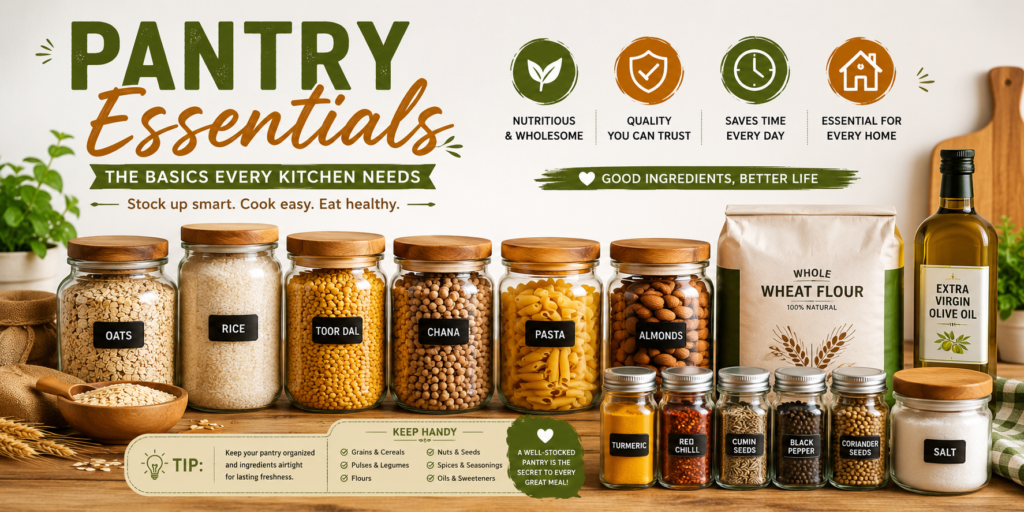
Pantry essentials are long-lasting food items and household staples that form the backbone of everyday cooking. These products typically have an extended shelf life and can be used to prepare a variety of meals.
Keeping these ingredients on hand ensures you can cook nutritious dishes without making frequent grocery store visits.
Benefits include:
- Faster meal preparation
- Lower grocery expenses
- Reduced food waste
- Better emergency preparedness
- Easier weekly meal planning
- More flexibility for healthy cooking
Why Every Home Needs a Well-Stocked Pantry
A stocked pantry offers more than convenience.
Save Time
Instead of visiting the grocery store multiple times each week, you already have the ingredients needed for breakfast, lunch, dinner, and snacks.
Save Money
Buying pantry staples in bulk often costs less than purchasing small quantities repeatedly.
Reduce Food Waste
Planning meals around pantry ingredients helps prevent fresh produce from spoiling before it’s used.
Handle Unexpected Situations
Weather emergencies, busy schedules, or unexpected guests become much easier to manage when your pantry is prepared.
Support Healthy Eating
Healthy grains, beans, oats, nuts, and spices make nutritious meals easy to prepare.
Complete Pantry Essentials Checklist
1. Rice & Grains
These are everyday cooking staples.
Include:
- Basmati rice
- Brown rice
- White rice
- Poha
- Quinoa
- Oats
- Millet
- Broken wheat (Dalia)
- Barley
These ingredients work well for breakfast, lunch, and dinner.
2. Flour & Baking Essentials
Keep a variety of flours available.
Must-have options:
- Wheat flour (Atta)
- All-purpose flour (Maida)
- Besan (Gram flour)
- Rice flour
- Corn flour
- Semolina (Sooji)
- Baking powder
- Baking soda
- Yeast
- Cocoa powder
Perfect for rotis, snacks, cakes, pancakes, and desserts.
3. Lentils & Pulses
Rich in plant protein and fiber.
Stock:
- Toor Dal
- Moong Dal
- Masoor Dal
- Urad Dal
- Chana Dal
- Kabuli Chana
- Rajma
- Black Chana
- Green Moong
These staples support healthy, protein-rich meals.
4. Cooking Oils & Healthy Fats
Different oils suit different cooking methods.
Recommended options:
- Mustard oil
- Groundnut oil
- Sunflower oil
- Rice bran oil
- Olive oil
- Coconut oil
- Ghee
Store oils in cool, dark places to maintain freshness.
5. Essential Spices
Spices transform simple ingredients into flavorful meals.
Basic spice collection:
- Turmeric
- Red chili powder
- Coriander powder
- Cumin seeds
- Mustard seeds
- Garam masala
- Black pepper
- Cinnamon
- Cardamom
- Cloves
- Bay leaves
- Asafoetida (Hing)
Fresh spices improve both taste and aroma.
6. Salt & Sweeteners
Keep different options available.
Examples:
- Table salt
- Rock salt
- Black salt
- Sugar
- Brown sugar
- Jaggery
- Honey
These ingredients are used in cooking, baking, and beverages.
7. Dry Fruits & Nuts
Nutritious snacks and cooking ingredients.
Include:
- Almonds
- Cashews
- Walnuts
- Pistachios
- Raisins
- Dates
- Peanuts
- Pumpkin seeds
- Sunflower seeds
- Flax seeds
Store in airtight containers.
8. Pasta & Noodles
Perfect for quick meals.
Keep:
- Spaghetti
- Penne
- Macaroni
- Instant noodles
- Vermicelli
Ideal for busy weekdays.
9. Breakfast Essentials
Morning essentials include:
- Cornflakes
- Muesli
- Oats
- Peanut butter
- Bread
- Jam
- Honey
- Tea
- Coffee
These items make breakfast quick and nutritious.
10. Canned & Packaged Foods
Useful for emergencies.
Examples:
- Tomato puree
- Sweet corn
- Baked beans
- Coconut milk
- Pasta sauce
Always check expiration dates.
11. Snacks
Healthy pantry snacks include:
- Roasted makhana
- Popcorn kernels
- Biscuits
- Khakhra
- Whole grain crackers
- Roasted chana
- Trail mix
12. Condiments & Sauces
Add flavor instantly.
Essential condiments:
- Tomato ketchup
- Soy sauce
- Vinegar
- Green chutney
- Pickles
- Mayonnaise
- Chili sauce
Pantry Storage Tips
Proper storage increases shelf life.
Best practices include:
- Use airtight containers.
- Label every container.
- Store grains separately.
- Keep spices away from sunlight.
- Rotate products using the “First In, First Out” method.
- Clean shelves monthly.
- Remove expired items regularly.
- Keep moisture away.
How to Organize Your Pantry
Arrange items into categories.
Example:
Top Shelf
- Rarely used baking supplies
- Extra stock
Middle Shelf
- Rice
- Flour
- Lentils
- Cereals
Eye-Level Shelf
- Daily cooking essentials
- Oils
- Spices
- Tea
- Coffee
Lower Shelf
- Heavy containers
- Bulk storage
Door Storage
- Sauces
- Vinegar
- Small bottles
This arrangement improves accessibility and saves time.
Pantry Essentials Shopping Checklist
Daily Essentials
- Rice
- Flour
- Cooking oil
- Salt
- Sugar
- Tea
- Coffee
Weekly Restock
- Bread
- Milk
- Eggs
- Fresh fruits
- Vegetables
- Yogurt
Monthly Purchases
- Pulses
- Dry fruits
- Spices
- Pasta
- Sauces
- Breakfast cereals
Budget-Friendly Pantry Tips
Save money without sacrificing quality.
- Buy staples in bulk.
- Compare prices before purchasing.
- Choose store brands when possible.
- Shop seasonal offers.
- Use loyalty rewards.
- Plan meals before shopping.
- Prepare a grocery list.
- Avoid impulse purchases.
- Store food correctly.
Common Pantry Mistakes to Avoid
Many households unknowingly waste money through poor pantry management.
Avoid these mistakes:
- Buying duplicate products
- Ignoring expiration dates
- Storing flour in humid conditions
- Keeping spices for years
- Purchasing without a grocery list
- Mixing old and new stock
- Overbuying perishable goods
Pantry Essentials for Beginners
If you’re starting a kitchen from scratch, begin with:
- Rice
- Wheat flour
- Cooking oil
- Salt
- Sugar
- Turmeric
- Chili powder
- Cumin
- Coriander powder
- Lentils
- Tea
- Coffee
- Pasta
- Oats
- Peanut butter
- Dry fruits
Expand your pantry gradually as your cooking needs grow.
Sustainable Pantry Practices
Create an eco-friendly pantry by:
- Buying refill packs.
- Using reusable glass containers.
- Reducing plastic packaging.
- Composting food scraps.
- Purchasing local products.
- Supporting sustainable grocery brands.
These habits reduce waste and benefit the environment.
Final Thoughts
A thoughtfully stocked pantry is more than just a collection of groceries—it’s an investment in convenience, health, and smart budgeting. By keeping essential grains, pulses, spices, oils, baking ingredients, snacks, and condiments readily available, you’ll spend less time shopping and more time enjoying home-cooked meals.
Regular organization, proper storage, and planned grocery shopping ensure your pantry remains efficient throughout the year. Whether you’re cooking for one person or a large family, these pantry essentials will help you prepare delicious meals with confidence while reducing food waste and saving money.
Frequently Asked Questions (FAQs)
1. What are pantry essentials?
Pantry essentials are long-lasting food staples such as rice, flour, lentils, spices, cooking oil, sugar, salt, and canned goods that are commonly used in everyday cooking.
2. How often should I restock my pantry?
Daily-use items should be checked weekly, while bulk staples like grains, flour, pulses, spices, and oils are usually restocked monthly based on household consumption.
3. What is the best way to organize a pantry?
Store similar items together, use airtight labeled containers, place frequently used products at eye level, and follow the First In, First Out (FIFO) method to minimize waste.
4. How can I keep pantry food fresh for longer?
Keep food in airtight containers, store it in a cool, dry place away from sunlight, clean shelves regularly, and check expiration dates to maintain freshness.
5. Which pantry essentials are best for healthy cooking?
Healthy pantry staples include oats, brown rice, quinoa, lentils, beans, olive oil, nuts, seeds, whole-grain flour, natural sweeteners, and a variety of herbs and spices.