Grocery shopping is something that happens every week. Without a good plan it can turn into something that costs too much money, takes too much time and feels really stressful. Whether you are buying for a family by yourself or getting groceries delivered online, using a way to buy groceries helps you waste less food and pick better food for your health.
This guide, about buying groceries has all the information you need to know—starting with making a list, checking prices, picking fruits and vegetables and learning how to read labels on food. If you use these tips you will make better choices when you buy things and stay within the money you have.
The Ultimate Grocery Buying Guide: Save Money & Shop Smarter
Why You Need a Grocery Buying Guide
A well-planned grocery shopping routine offers several benefits:
- Reduces unnecessary spending
- Prevents impulse purchases
- Minimizes food waste
- Helps maintain a healthier diet
- Saves time during shopping
- Keeps your pantry well-stocked
Whether you visit a supermarket or buy groceries online, planning ahead makes shopping easier and more cost-effective.
1. Plan Your Meals Before Shopping
One of the biggest grocery shopping mistakes is buying food without a plan.
How to Plan Meals
- Decide meals for the next 5–7 days.
- Check what ingredients you already have.
- Note missing items.
- Plan meals around seasonal produce.
- Include breakfast, lunch, dinner, and snacks.
Meal planning helps reduce food waste while making grocery shopping faster.
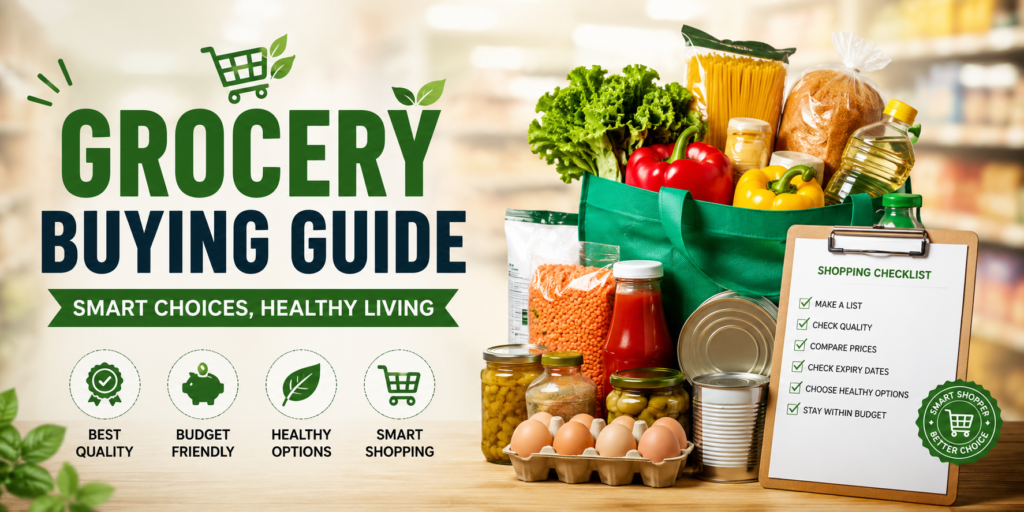
2. Make a Grocery Shopping List
Never shop without a grocery list.
Organize your list into categories:
Fruits & Vegetables
- Apples
- Bananas
- Tomatoes
- Potatoes
- Spinach
- Onions
Dairy
- Milk
- Yogurt
- Cheese
- Butter
Pantry Essentials
- Rice
- Flour
- Lentils
- Cooking oil
- Sugar
- Salt
Protein
- Eggs
- Beans
- Chickpeas
- Tofu
- Chicken (optional)
Snacks
- Biscuits
- Nuts
- Popcorn
- Crackers
A categorized shopping list reduces the chances of forgetting important items.
3. Set a Grocery Budget
Before entering a grocery store or placing an online order, decide how much you want to spend.
Budget Tips
- Set weekly or monthly grocery limits.
- Track grocery expenses.
- Prioritize essentials first.
- Avoid buying unnecessary luxury items.
- Compare prices before purchasing.
Budgeting helps control spending without sacrificing quality.
4. Check Your Pantry First
Before shopping, inspect your:
- Refrigerator
- Freezer
- Pantry
- Kitchen cabinets
You may already have:
- Rice
- Pasta
- Flour
- Spices
- Cooking oil
- Canned foods
Buying duplicates wastes both money and storage space.
5. Buy Seasonal Fruits and Vegetables
Seasonal produce offers several advantages.
Benefits
- Fresher
- Better taste
- Higher nutritional value
- Lower prices
- Supports local farmers
Examples include:
Summer:
- Mangoes
- Watermelon
- Cucumber
Winter:
- Carrots
- Cauliflower
- Green peas
Monsoon:
- Bottle gourd
- Ridge gourd
- Pumpkin
6. Compare Prices Before Buying
Never purchase the first product you see.
Compare:
- Price per unit
- Package size
- Brand quality
- Customer reviews (online)
- Store discounts
Sometimes larger packs provide better value, while smaller packs reduce waste.
7. Understand Food Labels
Reading labels helps you make healthier choices.
Check:
- Expiry date
- Manufacturing date
- Ingredients
- Nutritional information
- Sugar content
- Sodium
- Added preservatives
Choose products with simple ingredient lists whenever possible.
8. Don’t Shop While Hungry
Shopping on an empty stomach often leads to impulse buying.
Research shows hungry shoppers tend to purchase:
- More snacks
- Sugary foods
- Processed foods
- Items not on their list
Eat a light meal before grocery shopping to make smarter decisions.
9. Buy Pantry Staples in Bulk
Bulk buying saves money on frequently used items.
Good bulk purchases include:
- Rice
- Flour
- Lentils
- Sugar
- Salt
- Pasta
- Oats
- Cooking oil
Avoid bulk buying highly perishable foods unless you can use them before they spoil.
10. Choose Fresh Produce Carefully
Fruits
Look for:
- Bright color
- Firm texture
- Fresh aroma
- No bruises
Vegetables
Check for:
- Crisp leaves
- Firm texture
- Natural color
- No mold
Fresh produce lasts longer and tastes better.
11. Shop During Sales—But Smartly
Discounts can save money if you buy products you actually need.
Best items to buy during sales:
- Household essentials
- Cleaning supplies
- Pantry staples
- Packaged foods
- Personal care products
Avoid purchasing items simply because they are discounted.
12. Online vs. In-Store Grocery Shopping
Online Grocery Shopping
Advantages:
- Saves time
- Home delivery
- Easy price comparison
- Digital coupons
- Convenient ordering
Disadvantages:
- Delivery charges
- Can’t inspect fresh produce
- Limited substitutions
In-Store Shopping
Advantages:
- Inspect freshness
- Immediate purchase
- No delivery wait
- Better control over selection
Disadvantages:
- Time-consuming
- More impulse purchases
- Travel expenses
Choose the option that best fits your lifestyle and budget.
13. Reduce Food Waste
Simple habits can reduce waste significantly.
Tips:
- Follow FIFO (First In, First Out).
- Store fruits and vegetables correctly.
- Freeze leftovers.
- Use leftovers creatively.
- Buy only what you’ll use.
Reducing waste saves money and benefits the environment.
14. Essential Grocery Categories
A balanced grocery cart typically includes:
Fresh Produce
- Fruits
- Vegetables
Grains
- Rice
- Wheat flour
- Oats
- Pasta
Protein
- Lentils
- Beans
- Eggs
- Tofu
Dairy
- Milk
- Yogurt
- Cheese
Pantry Essentials
- Cooking oil
- Salt
- Sugar
- Tea
- Coffee
- Spices
Household Items
- Dish soap
- Laundry detergent
- Paper towels
- Trash bags
Personal Care
- Shampoo
- Soap
- Toothpaste
- Toothbrushes
Common Grocery Shopping Mistakes
Avoid these frequent mistakes:
- Shopping without a list
- Ignoring unit prices
- Buying excessive quantities
- Falling for marketing tricks
- Forgetting expiry dates
- Shopping while hungry
- Skipping price comparisons
Final Thoughts
Grocery shopping is not about saving money. It is about buying things that’re good for you and your family. You can do this by thinking about what you want to eat and making a list. Then you compare prices. Pick the fresh and good food that is available during that time of year. Sticking to the money you have to spend is also important. This way you can have good food at home. You can shop on the computer. Go to the store near you. These simple ideas will make shopping for groceries more fun. Grocery shopping can be easy. You will get the things you need. You will be happy when you shop for groceries using these ideas and you will have good food at home.
Frequently Asked Questions (FAQs)
1. What is the best way to save money on groceries?
Plan your meals, create a shopping list, compare prices, buy seasonal produce, purchase pantry staples in bulk, and avoid impulse buying.
2. Is online grocery shopping cheaper than shopping in-store?
It can be. Online stores often offer exclusive discounts and make price comparisons easier, but delivery fees may offset some savings. Compare the total cost before ordering.
3. What should always be on a grocery shopping list?
Include fruits, vegetables, grains, dairy, protein sources, pantry staples, snacks, household essentials, and personal care products based on your needs.
4. Why is meal planning important before grocery shopping?
Meal planning helps you buy only the ingredients you need, reduces food waste, saves money, and simplifies daily cooking.
5. How can I avoid impulse purchases at the grocery store?
Shop with a prepared list, set a budget, avoid shopping when hungry, and focus on essentials rather than promotional displays.