A well‑organized kitchen makes everyday cooking easier, faster and more enjoyable. Whether you are setting up a kitchen, moving into a new home or restocking household supplies, having the right kitchen essentials can save time, reduce food waste and simplify meal preparation. I know how a tidy kitchen can lift your mood and speed up your day.
From cooking ingredients such as cooking oil, rice, flour and spices to useful kitchen tools, storage containers and cleaning supplies every household needs a few basic items to keep its kitchen running smoothly. However choosing the products can sometimes be confusing especially when you are trying to manage your grocery budget and avoid unnecessary purchases.
This guide to kitchen items, for daily use covers the must‑have ingredients, utensils, appliances, pantry staples and cleaning products that every household should consider. It will also help you create a practical kitchen essentials checklist, organize your pantry and plan grocery shopping trips.
Whether you cook every day or prepare meals occasionally this checklist will help you keep your kitchen stocked with the essentials you actually need.
1. Essential Cooking Ingredients for Every Kitchen
Cooking ingredients are the foundation of everyday meals. Keeping commonly used ingredients available helps you prepare breakfast, lunch, dinner, and snacks without making frequent trips to the grocery store.
Here are the most important kitchen ingredients to keep in stock.
Grains and Cereals
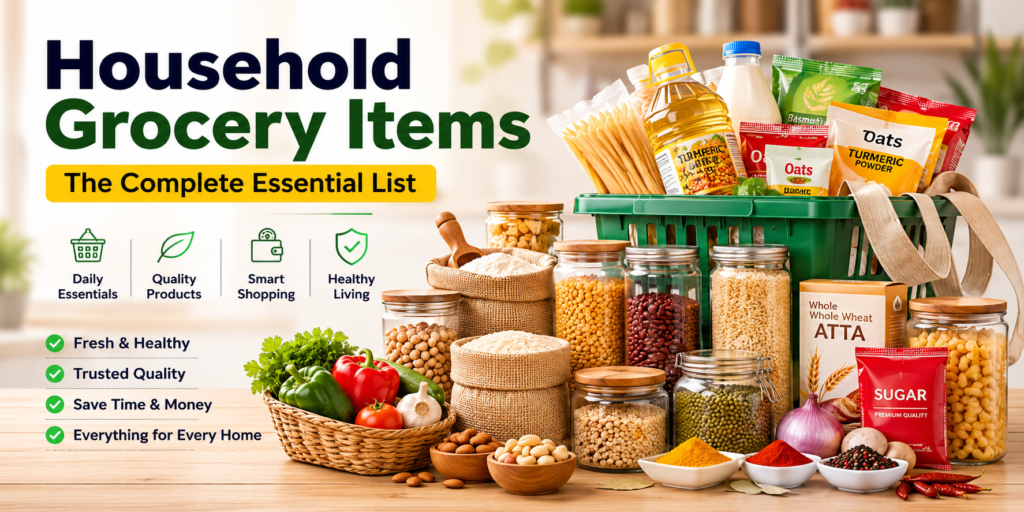
Grains and cereals are everyday staples in many Indian households. They are versatile, easy to store, and suitable for preparing a wide variety of meals.
Essential grains and cereals include:
- Wheat flour (atta): Used to prepare chapati, roti, paratha, and other flatbreads.
- Rice: A versatile staple for everyday meals, pulao, khichdi, and rice-based dishes.
- Semolina (sooji): Useful for preparing upma, halwa, and breakfast dishes.
- Poha: A convenient ingredient for quick breakfast recipes.
- Oats: Suitable for breakfast porridge, overnight oats, and other simple meals.
- Dalia: Commonly used for preparing porridge, khichdi, and light meals.
- Vermicelli (seviyan): Useful for preparing sweet and savoury dishes.
Choose quantities according to your family’s consumption and available storage space. Store grains in clean, dry, airtight containers to help protect them from moisture and pests.
Pulses and Lentils
Pulses and lentils are important pantry staples in Indian kitchens. They are useful sources of plant-based protein and can be used in everyday meals.
Consider keeping these varieties:
- Toor dal (arhar dal)
- Masoor dal
- Yellow moong dal
- Green moong dal
- Chana dal
- Urad dal
- Kala chana
- Rajma
- Kabuli chana (chickpeas)
You do not need to purchase every variety at once. Select the pulses your family regularly eats and rotate them to maintain freshness.
Cooking Oils and Ghee
Cooking oils and ghee are commonly used for preparing vegetables, dals, parathas, snacks, and other dishes.
Common kitchen options include mustard oil, sunflower oil, groundnut oil, rice bran oil, and ghee. Choose an oil that suits your cooking methods, taste preferences, and nutritional needs.
Store oils away from direct sunlight and heat. Check the expiry date and avoid buying more than you can reasonably use before the product loses its quality.
Salt, Sugar, and Sweeteners
Salt and sugar are basic ingredients used in many households.
Keep these items according to your needs:
- Iodized salt
- Sugar
- Jaggery (gur)
- Honey, if regularly used
For households monitoring sugar intake, consider limiting added sugars and choosing suitable alternatives based on individual dietary needs.
2. Everyday Spices and Seasonings
Spices add flavour, aroma, and variety to home-cooked meals. A small, well-chosen collection of spices is often enough for everyday cooking.
Basic Indian Spices
The following spices are useful in many Indian recipes:
- Turmeric powder
- Red chilli powder
- Coriander powder
- Cumin seeds (jeera)
- Mustard seeds (rai)
- Garam masala
- Black pepper
- Hing (asafoetida)
- Ajwain (carom seeds)
- Kasuri methi (dried fenugreek leaves)
You may also want to keep whole spices such as cinnamon, cloves, cardamom, and bay leaves for pulao, curries, and special dishes.
Ginger, Garlic, and Green Chillies
Fresh ginger, garlic, and green chillies are common ingredients in everyday cooking. They can be used in curries, dals, chutneys, marinades, and vegetable dishes.
Purchase fresh ingredients in quantities that match your usage. Refrigerate suitable items and discard anything showing signs of spoilage.
Tips for Storing Spices
- Use clean, airtight containers.
- Keep spices away from moisture and direct heat.
- Label containers for easy identification.
- Buy smaller quantities of spices that you use occasionally.
- Check aroma and freshness before adding spices to food.
Organizing spices by frequency of use can make meal preparation quicker and help you identify which items need replenishing.
3. Essential Kitchen Utensils and Cookware
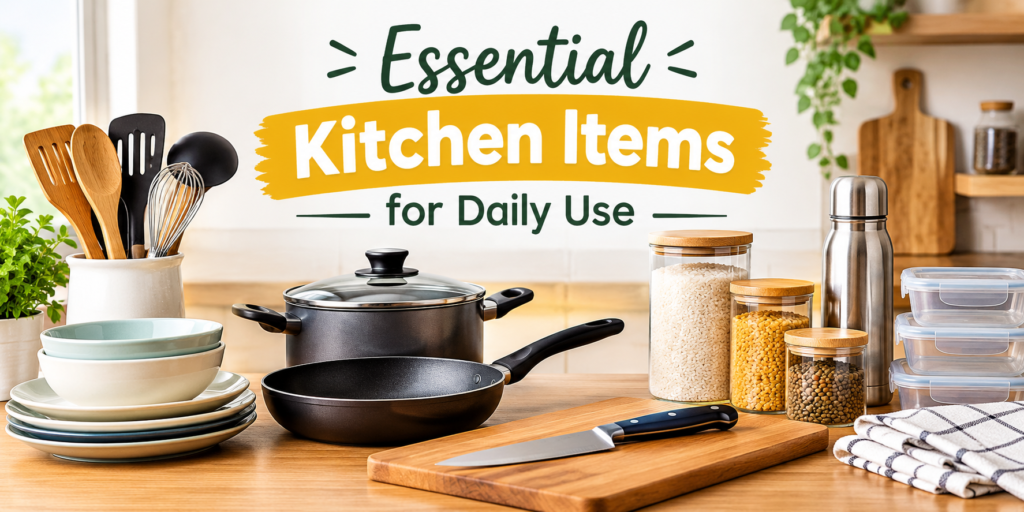
The right kitchen utensils help make cooking safer, easier, and more efficient. You do not need an expensive collection of cookware to prepare everyday meals.
Must-Have Cookware
Consider adding these basic items to your kitchen:
- Pressure cooker: Useful for cooking dal, rice, beans, and vegetables.
- Kadai or deep frying pan: Suitable for preparing sabzi, curries, and stir-fried dishes.
- Tawa: Essential for cooking roti, chapati, dosa, and paratha.
- Saucepan: Useful for boiling milk, heating liquids, and making tea.
- Frying pan: Suitable for omelettes, pancakes, and shallow frying.
- Cooking pots: Helpful for preparing soups, noodles, and larger meals.
- Lids: Useful for covering cookware during cooking and reducing splashes.
Choose cookware that suits your stove type, household size, and cooking habits. Check that handles are secure and that the base is suitable for your cooking surface.
Everyday Kitchen Tools
Basic kitchen tools are equally important for daily food preparation.
Useful utensils include:
- Spatulas and turners
- Ladles
- Tongs
- Vegetable peeler
- Kitchen knife
- Chopping board
- Grater
- Whisk
- Measuring cups and spoons
- Kitchen scissors
- Serving spoons
Keep knives sharp, clean, and stored safely. Wash and dry utensils properly after use to maintain hygiene.
Useful Small Appliances
Small kitchen appliances can save time, but not every household needs all of them.
Common options include:
- Mixer grinder for grinding spices and preparing chutneys
- Electric kettle for boiling water
- Toaster for preparing toast
- Rice cooker for convenient rice preparation
- Hand blender for blending soups and other foods
- Microwave oven for reheating and selected cooking tasks
Start with appliances that solve a regular problem in your kitchen. Consider energy consumption, maintenance, warranty, and available counter space before purchasing additional equipment.
4. Kitchen Storage Containers and Organization Items
Proper storage helps maintain food quality, keeps ingredients easy to find, and makes better use of kitchen space.
Airtight Containers
Airtight containers are useful for storing flour, rice, pulses, sugar, cereals, and snacks.
When selecting containers, consider:
- Food-safe materials
- Secure-fitting lids
- Easy-to-clean designs
- Suitable sizes for your shelves
- Transparent sides for quick identification
Keep containers clean and completely dry before filling them. Label them with the product name and, where useful, the date of purchase or opening.
Refrigerator Storage Items
Refrigerator storage products can help separate ingredients and reduce food waste.
Useful items include food-safe boxes, covered bowls, reusable storage containers, and suitable bags for produce.
Store raw foods separately from ready-to-eat foods. Follow appropriate refrigeration practices and avoid keeping perishable foods at room temperature for extended periods.
Pantry Organization Tips
A practical pantry organization system makes grocery shopping easier.
- Group grains, pulses, spices, snacks, and baking ingredients separately.
- Keep frequently used products within easy reach.
- Place newly purchased items behind older items.
- Check expiry dates regularly.
- Keep a written or digital inventory of frequently used essentials.
An organized pantry makes it easier to identify what you already have before placing your next grocery order.
5. Breakfast and Quick-Meal Essentials
Busy mornings and hectic evenings often require meals that can be prepared quickly. Keeping a few versatile ingredients at home can help you avoid unnecessary takeaways and last-minute shopping.
Useful breakfast and quick-meal essentials include:
- Oats and poha
- Bread or whole-wheat bread
- Eggs, if consumed
- Milk or suitable alternatives
- Curd
- Peanut butter or other preferred spreads
- Nuts and seeds
- Besan
- Noodles or pasta
- Tomato puree or canned tomatoes
- Basic herbs and seasonings
You can combine these ingredients to prepare dishes such as poha, upma, oats porridge, sandwiches, pasta, cheela, and simple vegetable noodles.
For healthier everyday meals, include vegetables, fruits, protein-rich foods, and whole grains according to your preferences and nutritional needs.
Buying ingredients that work in several recipes can also help reduce food waste. For example, besan can be used for cheela and kadhi, while oats can be used for breakfast bowls and homemade snacks.
6. Dairy, Refrigerated Foods, and Fresh Produce
Fresh and refrigerated products are important for many everyday meals. Unlike dry pantry staples, however, these products generally require more frequent shopping.
Dairy Products
Depending on your family’s preferences, you may regularly need:
- Milk
- Curd or yogurt
- Paneer
- Butter
- Cheese
- Ghee
Check storage instructions and expiry dates. Refrigerate perishable dairy products promptly and follow the manufacturer’s recommendations after opening.
Fruits and Vegetables
Fresh produce adds variety, flavour, and important nutrients to everyday meals.
Common options include:
- Potatoes and onions
- Tomatoes
- Carrots
- Spinach and other leafy vegetables
- Seasonal vegetables
- Bananas
- Apples
- Oranges
- Seasonal fruits
Choose produce based on your weekly meal plan, household size, budget, and storage capacity.
Avoid buying large quantities of highly perishable produce unless you know you will use it. Planning meals around seasonal produce can also help manage grocery costs.
7. Baking and Basic Cooking Essentials
If you regularly bake or prepare homemade snacks, keeping a few additional ingredients can make cooking more convenient.
Useful baking and cooking essentials include:
- Baking powder
- Baking soda
- Cornflour
- Cocoa powder
- Vanilla essence
- Yeast, if needed
- Besan
- Breadcrumbs
- Vinegar
- Soy sauce
- Tomato ketchup
- Lemon juice or fresh lemons
You do not need to stock every item unless you use it. For occasional baking, smaller packages may be more practical than buying ingredients in bulk.
Check the storage requirements of each product, particularly ingredients that can absorb moisture or lose effectiveness over time.
8. Essential Kitchen Cleaning and Hygiene Supplies
A clean kitchen is essential for safe food preparation. Along with cooking ingredients and utensils, every household should maintain a basic supply of cleaning products.
Kitchen Cleaning Checklist
Keep the following items available as needed:
- Dishwashing liquid or dishwashing bar
- Scrubbers and cleaning brushes
- Clean dishcloths
- Kitchen towels
- Food-safe surface cleaner
- Garbage bags
- Cleaning gloves
- A separate cleaning sponge for different tasks
Replace worn-out or dirty sponges and cloths regularly. Wash hands before handling food, clean food-contact surfaces, and wash chopping boards and utensils after preparing raw ingredients.
Always follow product labels when using cleaning chemicals. Never mix bleach with acids, vinegar, or ammonia-based cleaners because dangerous gases can form.
Food Safety Basics
- Keep raw meat, seafood, and their juices away from ready-to-eat foods.
- Wash fruits and vegetables under clean running water before use.
- Store perishable foods at appropriate temperatures.
- Use separate or thoroughly cleaned chopping boards for different food types.
- Keep rubbish covered and remove it regularly.
- Check food packaging for damage, leaks, and expiry dates.
Good kitchen hygiene protects your household and helps maintain a safer cooking environment.
9. How to Create a Budget-Friendly Kitchen Essentials Checklist
Stocking a kitchen does not mean buying every available product. A planned grocery list helps you focus on what your household actually needs.
Step 1: Check Your Existing Stock
Before shopping, inspect your cupboards, refrigerator, and storage containers. Identify which items are running low and which products you already have in sufficient quantities.
Step 2: Plan Your Meals
Create a simple weekly meal plan for breakfast, lunch, dinner, and snacks. Identify the ingredients required for each meal and add only the missing items to your shopping list.
Step 3: Divide Your Shopping List into Categories
Organize your grocery checklist into categories such as:
- Grains and cereals
- Pulses and lentils
- Oils and spices
- Dairy and refrigerated products
- Fruits and vegetables
- Snacks and beverages
- Cleaning supplies
This system makes shopping more organized and reduces the chances of forgetting important items.
Step 4: Set a Grocery Budget
Decide how much you want to spend before shopping. Compare unit prices, check available offers, and select package sizes that fit your household’s needs.
A lower price does not always mean better value. Consider product quality, quantity, shelf life, and how much of the item you will actually use.
Step 5: Buy in Bulk Selectively
Bulk purchasing can be practical for frequently used, shelf-stable products such as rice, flour, and certain pulses when you have suitable storage space.
Avoid bulk buying highly perishable foods or products you rarely use. Large quantities can lead to spoilage and unnecessary expenses.
Step 6: Review Your Checklist Weekly
At the end of each week, note which products were used most often and which remained untouched. Adjust your future shopping list based on actual consumption.
This simple habit can make grocery planning more accurate, affordable, and efficient.
10. How Online Grocery Shopping Makes Kitchen Restocking Easier
Online grocery shopping offers a convenient way to replenish everyday kitchen essentials without visiting a physical store for every purchase.
Customers can browse products, compare prices, check package sizes, and order items from home. It can also be useful for families who want to maintain a regular grocery list and avoid forgetting frequently used ingredients.
When shopping online, consider these tips:
- Prepare a grocery list before browsing.
- Compare product sizes and prices.
- Check product descriptions and expiry information where available.
- Review delivery charges and minimum-order requirements.
- Purchase fresh produce in quantities you can use.
- Check your cart before confirming the order.
For grocery retailers, providing clear product categories, accurate descriptions, and convenient ordering options can improve the customer experience.
Dada Store can help customers make everyday grocery shopping more convenient by offering a place to explore household grocery essentials. Customers can visit dadastore.in to browse the available products and check current availability.
Keeping your regular kitchen essentials organized and replenished makes it easier to plan meals, manage household spending, and enjoy a smoother cooking routine.
Conclusion
A kitchen that has everything you need is made up of things that’re useful every day, not things you don’t really need. Things like grains, beans, oils, spices, simple tools, containers to keep food in, fruits and vegetables and things to clean with are the main parts of most kitchens.
The best list of kitchen things to have is one that shows what your family eats, how you cook, how much space you have and how much money you have. By looking at what you have planned, what you will eat each week, buying just the right amount and keeping your cupboard neat you can throw away less food and make cooking easier every day.
Begin with the things, get special items only when you really need them and check your supplies often. With some planning you can have a kitchen that’s tidy and helps you make simple meals, shop better and manage your money better.
Frequently Asked Questions (FAQs)
1. What are the most essential kitchen items for daily use?
The most essential kitchen items include wheat flour, rice, pulses, cooking oil, salt, sugar, basic spices, a pressure cooker, a kadai, a tawa, knives, chopping boards, storage containers, and dishwashing supplies. Fresh vegetables, fruits, and dairy products are also important depending on your household’s meals.
2. What groceries should every household keep in stock?
Most households benefit from keeping regularly used grains, pulses, cooking oil, salt, spices, and selected breakfast ingredients in stock. Items such as rice, atta, dal, oats, sugar, and tea or coffee can be useful staples. Choose products according to your family’s preferences and dietary needs.
3. How can I organize my kitchen essentials efficiently?
Group similar products together, use clean airtight containers for dry ingredients, label containers clearly, and keep frequently used items within easy reach. Check expiry dates regularly and place older products in front so they are used first.
4. How can I save money when buying kitchen essentials?
Plan meals before shopping, create a categorized grocery list, compare unit prices, use suitable offers, and avoid purchasing unnecessary products. Buy bulk quantities only when you can store and use them properly before their quality declines.
5. How often should I restock my kitchen essentials?
Restocking frequency depends on household size, cooking habits, storage capacity, and product type. Fresh fruits, vegetables, and dairy products may require frequent purchases, while properly stored dry staples can last longer. Reviewing your inventory once a week is a practical way to identify what needs replenishing.