Healthy food is really important for our body. It helps us stay healthy. Have lots of energy to do things we like. When we eat food our body gets what it needs to work properly and fight off sickness. Food also helps us feel happy and focused.
Sometimes it is hard to make good food choices because there are so many processed foods around us and we are always in a hurry. People also get confused about what to eat because they hear things from different people.
Whether you are buying food from the store planning meals for your family or just trying to be healthier knowing about food can make a big difference in your life. It can help you stay healthy and avoid getting very sick.
In this guide we will talk about why healthy food’s so important what our body needs to stay healthy ways to make our diet better and tips, for buying good food at the store to help us eat healthier.
What Is Healthy Nutrition?
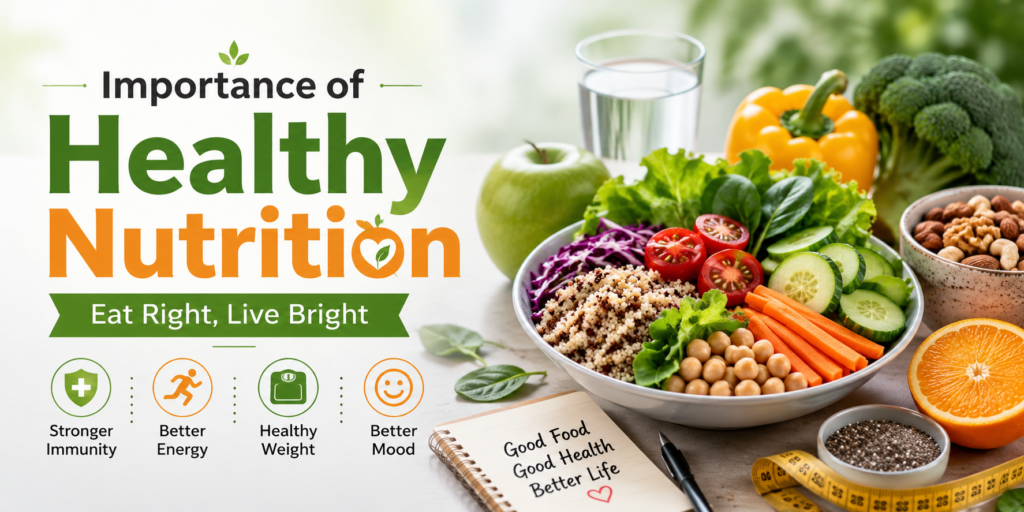
Healthy nutrition means consuming a balanced variety of foods that provide your body with the right amount of nutrients to function properly. A nutritious diet includes:
- Fresh fruits and vegetables
- Whole grains
- Lean proteins
- Healthy fats
- Dairy or dairy alternatives
- Plenty of water
Rather than focusing on restrictive diets, healthy nutrition emphasizes balance, portion control, and consistent healthy eating habits.
Why Is Healthy Nutrition Important?
Healthy nutrition plays a vital role in every stage of life. The food you eat directly affects your physical health, mental performance, immunity, and long-term quality of life.
1. Provides Essential Nutrients
Your body requires vitamins, minerals, carbohydrates, proteins, fats, and water every day. These nutrients help:
- Build muscles
- Repair tissues
- Produce energy
- Maintain healthy organs
- Support brain function
Without proper nutrition, your body cannot perform these essential functions efficiently.
2. Boosts Energy Levels
Balanced meals provide steady energy throughout the day.
Healthy energy sources include:
- Oats
- Brown rice
- Whole wheat bread
- Fruits
- Nuts
- Seeds
Unlike sugary snacks, nutrient-rich foods prevent energy crashes and improve productivity.
3. Strengthens the Immune System
A strong immune system depends on proper nutrition.
Immune-supporting nutrients include:
- Vitamin C
- Vitamin D
- Zinc
- Iron
- Protein
- Antioxidants
Foods such as citrus fruits, spinach, yogurt, almonds, and legumes help your body fight infections naturally.
4. Supports Healthy Weight Management
Healthy nutrition helps maintain a healthy body weight without following extreme diets.
A balanced diet:
- Controls hunger
- Reduces overeating
- Improves metabolism
- Supports fat loss
- Preserves muscle mass
Combining nutritious eating with regular exercise delivers the best results.
5. Improves Heart Health
Heart disease remains one of the leading causes of death worldwide.
Heart-friendly foods include:
- Oats
- Olive oil
- Fatty fish
- Walnuts
- Avocados
- Green vegetables
Limiting saturated fats, excessive salt, and processed foods reduces cardiovascular risk.
6. Reduces the Risk of Chronic Diseases
A healthy diet significantly lowers the risk of:
- Type 2 diabetes
- High blood pressure
- Obesity
- Heart disease
- Stroke
- Certain cancers
Eating nutrient-dense foods consistently offers long-term protection against lifestyle-related illnesses.
7. Enhances Brain Function
Nutrition affects memory, concentration, mood, and mental clarity.
Brain-boosting foods include:
- Blueberries
- Eggs
- Salmon
- Nuts
- Dark leafy greens
Healthy eating also supports emotional well-being and may reduce the risk of anxiety and depression.
8. Promotes Healthy Digestion
Fiber-rich foods improve digestion and support gut health.
Excellent fiber sources include:
- Whole grains
- Apples
- Beans
- Lentils
- Vegetables
- Chia seeds
Good digestion enhances nutrient absorption and helps prevent constipation.
9. Supports Healthy Skin, Hair, and Nails
Beauty starts from within.
Nutrients that promote healthy skin and hair include:
- Vitamin A
- Vitamin E
- Vitamin C
- Omega-3 fatty acids
- Biotin
- Protein
A nutritious diet contributes to glowing skin, stronger hair, and healthier nails.
10. Increases Longevity
Healthy eating habits established today contribute to a longer, healthier life by reducing disease risk and improving overall well-being.
Essential Nutrients Your Body Needs
Carbohydrates
Carbohydrates are the body’s primary energy source.
Healthy choices include:
- Brown rice
- Oats
- Sweet potatoes
- Whole wheat bread
- Quinoa
Protein
Protein helps build muscles, repair tissues, and support immunity.
Good protein sources include:
- Eggs
- Lentils
- Chickpeas
- Paneer
- Tofu
- Fish
- Chicken
- Greek yogurt
Healthy Fats
Healthy fats support brain function and hormone production.
Choose:
- Avocados
- Olive oil
- Nuts
- Seeds
- Fatty fish
Vitamins
Important vitamins include:
- Vitamin A
- Vitamin B Complex
- Vitamin C
- Vitamin D
- Vitamin E
- Vitamin K
Each vitamin supports different body functions.
Minerals
Essential minerals include:
- Calcium
- Iron
- Magnesium
- Zinc
- Potassium
These nutrients support bones, blood, muscles, and nerves.
Water
Hydration is often overlooked but is critical for:
- Digestion
- Temperature regulation
- Joint lubrication
- Nutrient transport
- Detoxification
Aim to drink enough water throughout the day based on your activity level and climate.
Healthy Foods to Include in Your Daily Diet
Fruits
- Apples
- Bananas
- Oranges
- Berries
- Papaya
Vegetables
- Spinach
- Broccoli
- Carrots
- Tomatoes
- Bell peppers
Whole Grains
- Oats
- Brown rice
- Whole wheat flour
- Quinoa
- Millets
Protein Foods
- Lentils
- Beans
- Eggs
- Paneer
- Tofu
- Chicken
- Fish
Healthy Snacks
- Mixed nuts
- Seeds
- Fresh fruit
- Yogurt
- Roasted chickpeas
Common Nutrition Mistakes to Avoid
Many people unintentionally develop unhealthy eating habits.
Avoid:
- Skipping breakfast
- Drinking sugary beverages daily
- Eating excessive processed foods
- Consuming too much salt
- Overeating
- Following fad diets
- Ignoring portion sizes
- Eating too little protein
- Not drinking enough water
Healthy Grocery Shopping Tips
Healthy nutrition begins at the grocery store.
1. Make a Shopping List
Planning helps reduce impulse purchases.
2. Read Food Labels
Check:
- Sugar content
- Sodium levels
- Fiber
- Protein
- Ingredients
Choose products with simple, recognizable ingredients whenever possible.
3. Buy Fresh Produce
Fill your cart with colorful fruits and vegetables.
4. Choose Whole Foods
Select minimally processed foods whenever possible.
5. Limit Junk Food
Reduce purchases of:
- Chips
- Sugary drinks
- Candy
- Highly processed snacks
6. Buy Seasonal Foods
Seasonal produce is often fresher, more nutritious, and budget-friendly.
7. Keep Healthy Snacks at Home
Stock:
- Nuts
- Yogurt
- Fruits
- Seeds
- Whole-grain crackers
Healthy snacks make it easier to avoid less nutritious options.
Healthy Nutrition for Different Age Groups
Children
Children need balanced nutrition for growth and brain development.
Focus on:
- Milk
- Fruits
- Vegetables
- Eggs
- Whole grains
Adults
Adults require balanced meals that support work, fitness, and disease prevention.
Seniors
Older adults benefit from:
- Calcium-rich foods
- Protein
- Fiber
- Vitamin D
- Hydration
These nutrients support bone health, muscle maintenance, and overall vitality.
Easy Tips to Start Eating Healthier
Improving your diet doesn’t have to happen overnight. Small, consistent changes can lead to lasting results.
- Eat more vegetables with every meal.
- Replace sugary drinks with water.
- Choose whole grains over refined grains.
- Include a source of protein in every meal.
- Eat fruit instead of sugary desserts.
- Practice portion control.
- Cook more meals at home.
- Plan weekly grocery shopping.
- Stay physically active.
- Get enough sleep to support healthy eating habits.
Benefits of Healthy Nutrition at a Glance
- Increases daily energy
- Improves concentration
- Strengthens immunity
- Supports healthy weight
- Protects heart health
- Reduces disease risk
- Promotes healthy digestion
- Enhances skin and hair
- Supports strong bones
- Improves overall quality of life
Conclusion
Healthy nutrition is one of the most powerful investments you can make in your future. Every healthy meal contributes to better energy, stronger immunity, improved mental focus, and a reduced risk of chronic disease. Instead of chasing quick-fix diets, focus on creating sustainable eating habits built around whole, nutrient-rich foods.
Remember that healthy living starts with smart grocery shopping and balanced meal planning. By choosing fresh fruits, vegetables, whole grains, lean proteins, and healthy fats, you’ll build a lifestyle that supports both your physical and mental well-being for years to come.
The journey toward better health begins with small daily choices. Start today, stay consistent, and enjoy the long-term benefits of healthy nutrition.
Frequently Asked Questions (FAQs)
1. Why is healthy nutrition important?
Healthy nutrition provides essential nutrients, boosts immunity, improves energy levels, supports healthy weight, and reduces the risk of chronic diseases such as diabetes and heart disease.
2. What are the five essential nutrients?
The five major nutrients are carbohydrates, proteins, fats, vitamins, and minerals. Water is also essential for overall health and proper body function.
3. How can I improve my daily nutrition?
Eat more fruits and vegetables, choose whole grains, include lean protein, drink plenty of water, limit processed foods, and practice portion control.
4. What foods should I avoid for better nutrition?
Limit sugary drinks, processed snacks, foods high in trans fats, excessive salt, and refined carbohydrates. Focus instead on minimally processed, nutrient-rich foods.
5. Does healthy nutrition help with weight loss?
Yes. A balanced, nutrient-rich diet can help manage calorie intake, improve metabolism, increase satiety, and support healthy, sustainable weight loss when combined with regular physical activity.