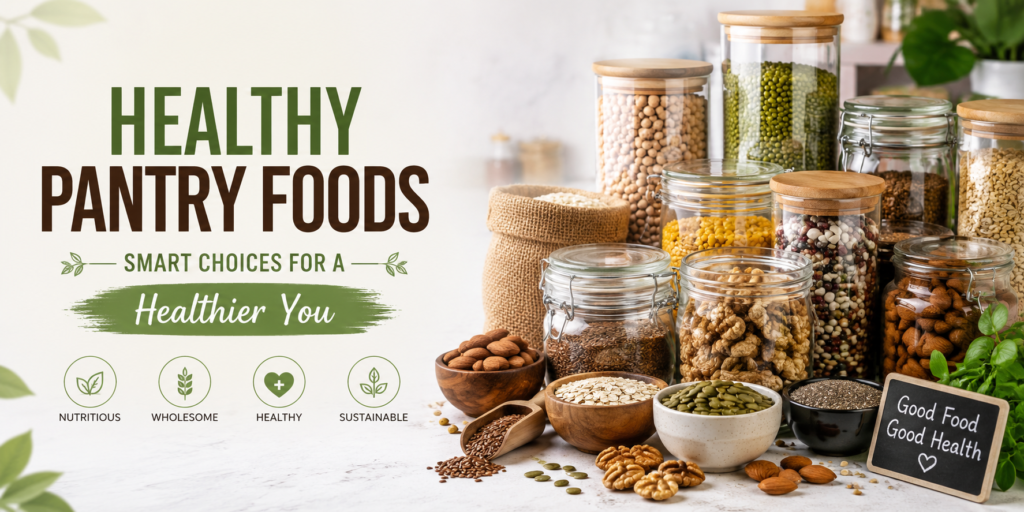
A healthy lifestyle begins with the food you have in your kitchen. You need to have fruits and vegetables but the food in your pantry is just as important for making quick and healthy meals every day.
You should have food in your pantry so you can make good meals for breakfast, lunch, dinner or snacks. If your pantry is organized you will not throw away food you will save money and it will be easier to plan your meals.
This guide will show you the food to keep in your pantry, about these foods, how to store them and how to use them when you are cooking every day.
What Are Healthy Pantry Foods?
Healthy pantry foods are foods that do not go bad easily and have nutrients. They can be kept for weeks or even months.
Examples of these foods are:
* grains
* pulses
* spices
* nuts
* seeds
* healthy oils
* canned goods
These are all foods that have lots of good stuff your body needs.
Having these foods around makes it easier to make meals. This is especially true when you do not have fresh groceries.
Benefits of Keeping Healthy Pantry Staples
A well-stocked pantry offers several advantages:
- Supports healthier eating habits
- Saves time during busy weekdays
- Reduces unnecessary grocery trips
- Helps lower food expenses
- Makes meal planning easier
- Reduces food waste
- Provides ingredients for quick homemade meals
- Offers emergency meal options
Best Healthy Pantry Foods to Keep at Home
1. Whole Grains
Whole grains are excellent sources of fiber, vitamins, and slow-digesting carbohydrates.
Popular options include:
- Brown rice
- Oats
- Quinoa
- Whole wheat flour
- Barley
- Millet
- Rolled oats
Benefits:
- Long-lasting energy
- Better digestion
- Supports heart health
- Helps maintain healthy blood sugar levels
2. Lentils and Pulses
Lentils and pulses are affordable, protein-rich foods that should be part of every healthy pantry.
Examples:
- Red lentils (Masoor Dal)
- Green gram (Moong Dal)
- Chickpeas
- Black beans
- Kidney beans
- Pigeon peas (Arhar Dal)
Benefits:
- High in plant protein
- Rich in dietary fiber
- Good source of iron
- Keeps you full for longer
3. Dry Beans
Dry beans are nutritious, versatile, and have a long shelf life.
Popular varieties include:
- Pinto beans
- Navy beans
- Black-eyed peas
- White beans
Use them in:
- Soups
- Salads
- Burritos
- Rice bowls
- Curries
4. Healthy Cooking Oils
Choosing healthier oils improves the nutritional quality of your meals.
Best options include:
- Extra virgin olive oil
- Mustard oil
- Groundnut oil
- Sesame oil
- Avocado oil
Use oils in moderation to maintain a balanced diet.
5. Nuts
Nuts provide healthy fats, protein, and important minerals.
Keep these stocked:
- Almonds
- Walnuts
- Pistachios
- Cashews
- Peanuts
Perfect for:
- Snacks
- Oatmeal
- Smoothies
- Homemade trail mix
6. Seeds
Seeds are small but packed with nutrients.
Healthy pantry seeds include:
- Chia seeds
- Flaxseeds
- Pumpkin seeds
- Sunflower seeds
- Sesame seeds
Benefits:
- Rich in Omega-3 fatty acids
- High in fiber
- Excellent for heart health
- Support digestive health
7. Natural Nut Butters
Nut butters are convenient protein sources.
Choose options with:
- No added sugar
- No hydrogenated oils
- Minimal ingredients
Examples:
- Peanut butter
- Almond butter
- Cashew butter
8. Herbs and Spices
Herbs and spices enhance flavor without adding excess calories.
Essential pantry spices:
- Turmeric
- Black pepper
- Cumin
- Coriander
- Cinnamon
- Paprika
- Garlic powder
- Ginger powder
- Oregano
- Basil
Many spices also contain antioxidants.
9. Healthy Sweeteners
Instead of refined sugar, consider healthier alternatives.
Options include:
- Honey
- Jaggery
- Date syrup
- Maple syrup (in moderation)
Remember that all sweeteners should still be consumed in moderation.
10. Canned Healthy Foods
Choose canned products with low sodium and no added sugar.
Healthy options:
- Tomatoes
- Chickpeas
- Beans
- Tuna (if non-vegetarian)
- Coconut milk
Always check nutrition labels before purchasing.
11. Whole Grain Pasta
Whole wheat pasta contains more fiber than refined pasta.
Pair it with:
- Tomato sauce
- Vegetables
- Lentils
- Olive oil
12. Healthy Snacks
Keep healthier snack options available to reduce cravings.
Examples:
- Roasted chickpeas
- Popcorn kernels
- Rice cakes
- Whole grain crackers
- Dry fruits
Pantry Foods Rich in Protein
Protein-rich pantry foods include:
- Lentils
- Chickpeas
- Beans
- Peanut butter
- Oats
- Chia seeds
- Flaxseeds
- Pumpkin seeds
- Almonds
- Quinoa
These foods support muscle health and help keep you full between meals.
Healthy Pantry Foods for Weight Management
If you’re trying to manage your weight, prioritize:
- Oats
- Brown rice
- Lentils
- Beans
- Chia seeds
- Flaxseeds
- Unsalted nuts
- Whole wheat flour
- Quinoa
These foods are filling and nutrient-dense, making it easier to maintain balanced eating habits.
Pantry Organization Tips
A clean and organized pantry helps reduce waste and saves time.
Tips:
- Store grains in airtight containers.
- Label all storage jars.
- Follow the “first in, first out” rule.
- Keep frequently used items within easy reach.
- Store spices away from heat and sunlight.
- Check expiry dates every month.
How to Read Pantry Food Labels
When shopping for pantry foods, always check:
- Added sugar
- Sodium content
- Artificial preservatives
- Ingredient list
- Fiber content
- Protein content
- Whole grain percentage
The shorter and simpler the ingredient list, the better.
Easy Healthy Meal Ideas Using Pantry Staples
Overnight Oats
Ingredients:
- Rolled oats
- Chia seeds
- Milk
- Honey
- Nuts
Chickpea Salad
Ingredients:
- Canned chickpeas
- Olive oil
- Lemon juice
- Herbs
- Black pepper
Lentil Soup
Ingredients:
- Red lentils
- Garlic
- Onion
- Tomatoes
- Turmeric
- Cumin
Brown Rice Bowl
Top cooked brown rice with:
- Beans
- Vegetables
- Seeds
- Olive oil
- Herbs
Homemade Trail Mix
Mix together:
- Almonds
- Walnuts
- Pumpkin seeds
- Raisins
- Pistachios
Common Mistakes to Avoid
Avoid these pantry stocking mistakes:
- Buying more than you can use
- Ignoring expiry dates
- Choosing highly processed packaged foods
- Purchasing sugary cereals
- Not storing foods properly
- Keeping unhealthy snacks within easy reach
Final Thoughts
Having a pantry that is well stocked is really important for eating healthy. If you pick foods like whole grains, lentils, beans, nuts, seeds, good oils and spices that taste great you can make meals that are good for you easily and save time and money.
When you go shopping try to buy foods that are not processed much look at the labels to see what is in them and keep your pantry neat. Making a small changes, to your pantry can help you eat healthier every day and make cooking at home more fun.
Frequently Asked Questions (FAQs)
1. What are the healthiest pantry foods to keep at home?
Healthy pantry staples include oats, brown rice, lentils, beans, nuts, seeds, whole wheat flour, olive oil, herbs, and spices.
2. How long do pantry foods last?
Most dry pantry foods last between 6 months and 2 years when stored in airtight containers in a cool, dry place.
3. Which pantry foods are high in protein?
Lentils, chickpeas, beans, peanut butter, quinoa, oats, chia seeds, pumpkin seeds, and almonds are excellent protein-rich options.
4. How can I organize my pantry effectively?
Use clear airtight containers, label items, arrange foods by category, rotate older products to the front, and inspect expiration dates regularly.
5. What should I avoid buying for a healthy pantry?
Limit highly processed snacks, sugary cereals, foods high in sodium, refined grains, and products containing excessive artificial additives.