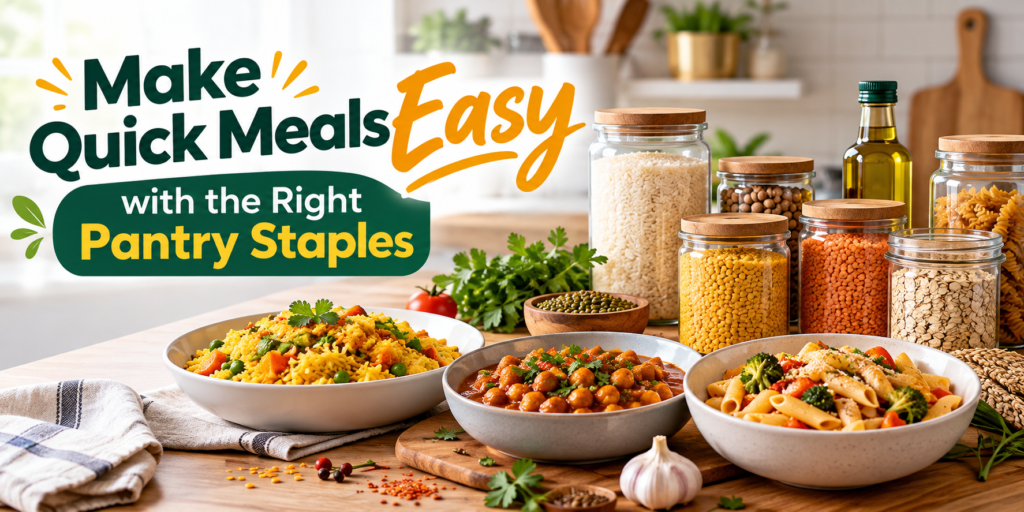
Have you ever come home after a day opened your kitchen cabinets and thought about what to cook? When there is not time making a tasty and filling meal can feel like a hard task. The good news is that you do not need a refrigerator or expensive items to create something delicious. With the pantry staples for quick meals you can make easy healthy dishes without needing to go to the store again.
Pantry staples are the food items that you keep in your kitchen for cooking. These include rice, flour, lentils, pasta, canned goods, cooking oil, spices, sauces and other ingredients that last a time. Keeping these basics on hand makes cooking helps stop food from going to waste and makes shopping for groceries easier
No matter if you are a person a student living on your own or a parent handling meals, for the family a neat and organized pantry can help save time and money. In this guide we will look at the pantry foods for quick meals how to keep them stored properly and easy meal ideas you can make using things you likely already have at home.
1. What Are Pantry Staples?
Pantry staples are frequently used food ingredients that can be stored safely for extended periods when kept under appropriate conditions. They form the foundation of everyday meals and make it easier to cook without relying on fresh ingredients for every dish.
A practical pantry includes a combination of grains, pulses, seasonings, cooking essentials, and convenient packaged foods. The exact selection depends on your household size, cooking habits, dietary preferences, and budget.
For example, an Indian household might regularly stock atta, rice, dal, poha, spices, and cooking oil. A household that enjoys international cuisine might also keep pasta, canned beans, tomato sauce, and noodles.
The main purpose of stocking pantry essentials is to make everyday cooking more convenient. When your kitchen contains versatile ingredients, you can combine them in different ways to prepare breakfast, lunch, dinner, and snacks.
2. Essential Grains and Carbohydrate-Rich Foods


10
Grains and other carbohydrate-rich foods are some of the most useful pantry staples for quick meals. They provide the base for numerous dishes and can be paired with vegetables, pulses, spices, and sauces.
Rice
Rice is a versatile ingredient that can be used for everyday meals. It pairs well with dal, vegetables, beans, curd, and a variety of gravies.
Quick meal ideas:
- Vegetable pulao with frozen or fresh vegetables.
- Lemon rice with basic spices and lemon juice.
- Rice and dal for a simple, satisfying meal.
- Fried rice using leftover rice and available vegetables.
Store uncooked rice in a clean, dry, airtight container to protect it from moisture and pests.
Wheat Flour (Atta)
Wheat flour is an important staple in many Indian kitchens. It is used to prepare chapatis, parathas, and other homemade flatbreads.
Quick meal ideas:
- Chapati with leftover dal or sabzi.
- Vegetable paratha using available vegetables.
- Quick roti rolls filled with cooked vegetables or paneer.
For freshness, store flour in an airtight container in a cool, dry place and follow the package instructions.
Oats
Oats are a convenient option for quick breakfasts and light meals. They can be prepared as sweet porridge or savory dishes.
Quick meal ideas:
- Oats porridge with milk, nuts, and fruit.
- Savory masala oats with vegetables.
- Overnight oats prepared in advance.
- Oats cheela using a suitable batter recipe.
Poha and Semolina (Sooji)
Poha and sooji are useful ingredients for quick Indian breakfasts and snacks.
Poha can be cooked with peanuts, turmeric, curry leaves, and vegetables. Sooji can be used for upma, savory pancakes, or instant-style homemade snacks.
Pasta and Noodles
Pasta and noodles are convenient choices for days when you need a quick meal. Keep a packet of pasta or noodles available along with basic seasonings and a suitable sauce.
You can prepare vegetable pasta, garlic noodles, or a simple tomato-based pasta dish without needing many ingredients.
SEO tip: Naturally include phrases such as quick meals with pantry ingredients, essential kitchen staples, and easy pantry meal ideas in relevant sections rather than repeating the same keyword unnecessarily.
3. Pulses, Lentils, and Beans for Easy Meals


7
Pulses and legumes are valuable pantry staples because they provide protein, fibre, and versatility. They are particularly useful for households that prefer vegetarian meals.
Common Lentils and Pulses
Consider keeping these items in your pantry:
- Moong dal: Suitable for dal, khichdi, and cheela.
- Masoor dal: Cooks relatively quickly and works well in soups and curries.
- Toor dal: Commonly used for everyday dal and sambar.
- Chana dal: Useful for traditional Indian dishes and selected snacks.
- Urad dal: Used in dishes such as dal makhani and several South Indian preparations.
Cooking times vary depending on the pulse, whether it has been soaked, and whether you use a pressure cooker or another cooking method.
Chickpeas and Kidney Beans
Dried chickpeas and rajma are useful for planned meals. However, they usually require soaking and longer cooking, so they are not always the best choice for a meal that must be ready immediately.
For greater convenience, you can keep canned chickpeas or beans if they fit your budget and shopping preferences. Rinse canned varieties when appropriate to reduce excess sodium.
Quick meal ideas:
- Chickpea salad with onion, tomato, and lemon.
- Quick bean curry using canned beans.
- Moong dal khichdi with rice and spices.
- Lentil soup with basic seasonings.
- Dal served with rice or chapati.
Shopping tip: Buy pulses that your household regularly consumes instead of stocking every variety. This helps prevent ingredients from remaining unused for months.
4. Cooking Oils, Spices, and Seasonings


7
Even the simplest ingredients can become flavourful meals when you have the right cooking essentials. Oils, spices, and seasonings are small but important parts of a functional pantry.
Essential Cooking Oils
Depending on your cooking habits, you might keep mustard oil, groundnut oil, sunflower oil, or olive oil. Choose oils appropriate for your cooking methods and use them in suitable quantities.
Store oils away from heat, direct sunlight, and strong odours. Always follow the storage guidance on the packaging.
Everyday Indian Spices
A basic Indian spice collection may include:
- Turmeric powder
- Cumin seeds
- Coriander powder
- Red chilli powder
- Garam masala
- Mustard seeds
- Black pepper
- Asafoetida (hing)
These spices can be used in dal, pulao, vegetable curries, poha, upma, and many other dishes.
Salt and Other Seasonings
Salt is an essential cooking ingredient. Depending on your recipes, you may also want black salt, dried herbs, chilli flakes, or seasoning blends.
Keep seasoning containers dry and tightly closed. Moisture can affect texture and quality.
Ready-to-Use Sauces and Condiments
Tomato ketchup, soy sauce, pasta sauce, vinegar, and other condiments can help you prepare quick meals with minimal effort.
For example, soy sauce can add flavour to vegetable noodles, while tomato sauce can serve as a convenient base for pasta.
Check product labels for sodium, added sugar, allergens, and storage requirements. Refrigerate products after opening when instructed.
5. Canned, Packaged, and Ready-to-Cook Foods


8
Convenience foods can make a pantry more practical, especially for busy households. They reduce preparation time and provide useful alternatives when fresh ingredients are limited.
Tomato Puree and Canned Tomatoes
Tomato puree and canned tomatoes are useful bases for pasta, curries, soups, and vegetable dishes.
Instead of chopping and cooking tomatoes from scratch, you can use a suitable packaged product to simplify meal preparation.
Canned Corn and Beans
Canned corn can be added to salads, sandwiches, pasta, and rice dishes. Canned beans can be used in wraps, curries, and quick protein-rich meals.
Choose products with ingredients that suit your needs, and compare sodium levels between brands.
Instant Soup and Ready-to-Cook Options
Instant soup mixes, quick-cooking grains, and other ready-to-cook products can be useful when time is limited. They should complement a varied diet rather than replace balanced meals every day.
Read the preparation instructions and ingredient labels before purchasing.
Breadcrumbs and Other Cooking Helpers
Breadcrumbs, cornflour, and similar cooking ingredients are useful for preparing snacks, thickening sauces, or adding texture to selected dishes.
Important storage note: Dry packaged foods should be stored according to their labels. Once canned food has been opened, transfer leftovers to a suitable covered container and refrigerate them promptly instead of leaving them in the opened can.
6. Breakfast Pantry Staples for Busy Mornings


4
Breakfast is easier to manage when you have ingredients that require little preparation. Keeping a few breakfast staples in your kitchen can help you avoid skipping meals or relying entirely on takeaway food.
Useful breakfast pantry essentials include:
- Oats and muesli
- Poha and sooji
- Peanut butter
- Whole-grain cereal
- Nuts and seeds
- Tea and coffee
- Shelf-stable milk, where suitable
- Bread or crackers, stored according to their packaging
Easy Breakfast Ideas
Oats porridge: Cook oats with milk or water and add fruit, nuts, or seeds.
Vegetable poha: Prepare poha with basic spices, peanuts, and available vegetables.
Upma: Use sooji, water, seasonings, and vegetables for a convenient breakfast.
Peanut butter toast: Pair bread with peanut butter and fruit for a quick option.
Muesli bowl: Combine muesli with milk or yogurt and fresh fruit.
Planning two or three breakfast options in advance makes morning routines easier and helps you use ingredients before they expire.
7. Healthy Pantry Staples for Balanced Quick Meals
A quick meal can still be balanced. The goal is to combine suitable sources of carbohydrates, protein, fibre, and other nutrients instead of relying on only one type of food.
Consider keeping these ingredients available:
| Pantry staple | How you can use it |
|---|---|
| Oats | Breakfast porridge or savory oats |
| Lentils | Dal, khichdi, or soup |
| Brown or white rice | Rice bowls and one-pot meals |
| Whole-wheat flour | Chapati and wraps |
| Chickpeas | Salads, curries, and wraps |
| Nuts and seeds | Breakfasts and snacks |
| Peanut butter | Toast or simple snacks |
| Canned tomatoes | Pasta, soups, and curries |
| Spices | Add flavour to everyday dishes |
Frozen vegetables, fresh onions, tomatoes, and other produce are also useful additions, although they are not all shelf-stable pantry staples.
How to Build a More Balanced Meal
Use these simple combinations as starting points:
- Rice + dal + vegetables
- Chapati + chickpea curry
- Oats + milk + nuts
- Pasta + beans + tomato sauce
- Khichdi + vegetables + curd, if suitable for your diet
The best combinations depend on your nutritional requirements, appetite, and dietary preferences.
For everyday cooking, convenience should not mean ignoring nutrition. Compare packaged products, watch added salt and sugar, and include vegetables and protein sources whenever possible.
8. Budget-Friendly Pantry Staples That Save Money
Stocking pantry essentials can help you manage grocery expenses when you shop strategically. The key is to purchase useful ingredients in quantities that your household can realistically consume.
Buy Frequently Used Staples in Suitable Quantities
Rice, flour, lentils, and oats are often economical choices when compared on a per-serving basis. However, larger packages are not always better if you cannot store them properly or finish them before quality declines.
Plan Meals Before Grocery Shopping
Create a simple meal plan for the next five to seven days. Check your cupboards first, then purchase only the ingredients needed to complete your meals.
This reduces duplicate purchases and helps prevent food waste.
Compare Unit Prices
Compare the price per kilogram, litre, or 100 grams rather than judging a product by its package price alone.
For example, a larger pack may cost less per kilogram but could still be poor value if some of the product expires or becomes unusable.
Choose Versatile Ingredients
Prioritize items that can be used in multiple recipes.
Rice can accompany dal, become pulao, or form the base of a rice bowl. Lentils can be used for dal, soup, and khichdi. Tomato puree can support several types of meals.
Use Store Offers Wisely
Grocery promotions and multi-buy discounts can be helpful for non-perishable products you regularly use. Avoid buying unnecessary quantities simply because an item is on sale.
For grocery retailers such as Dada Store, providing organized pantry categories, clear product descriptions, suitable pack sizes, and useful bundle offers can make it easier for customers to shop for everyday essentials.
9. How to Organize Your Pantry for Faster Cooking


9
Buying pantry staples is only part of the process. Organizing them correctly makes ingredients easier to find and helps you monitor what needs replenishing.
Use Clear, Airtight Containers
Transfer suitable dry goods into clean, dry, food-safe containers. Label containers with the ingredient name and, where practical, the purchase or opening date.
Keep original packaging information when needed for allergen, batch, or expiry details.
Follow First-In, First-Out Rotation
Use older suitable products before opening newer ones. Check dates and condition before use, and do not consume food that shows signs of spoilage or pest contamination.
Store Foods in the Right Conditions
Keep dry ingredients in a cool, dry place away from moisture, sunlight, and heat. Some foods, including whole-grain flours and nuts, may benefit from refrigeration or freezing depending on their packaging and storage guidance.
Maintain a Pantry Inventory
Make a simple list of what you have and what you need to buy.
For example:
- Rice — available
- Atta — running low
- Moong dal — available
- Oats — needs restocking
- Cooking oil — check quantity
- Tomato puree — available
Update the list before shopping so that you do not purchase items you already have.
10. Seven Quick Meal Ideas Using Pantry Staples
You do not need a complicated recipe for every meal. The following ideas demonstrate how basic ingredients can be combined to create practical everyday dishes.
| Meal idea | Main ingredients | Approximate preparation time |
|---|---|---|
| Masala oats | Oats, spices, vegetables | 10–15 minutes |
| Moong dal khichdi | Rice, moong dal, spices | 20–30 minutes |
| Vegetable poha | Poha, peanuts, spices | 15–20 minutes |
| Tomato pasta | Pasta, tomato puree, seasonings | 15–25 minutes |
| Chickpea salad | Cooked chickpeas, onion, lemon | 10 minutes |
| Vegetable pulao | Rice, vegetables, spices | 20–30 minutes |
| Dal and chapati | Lentils, atta, spices | 25–40 minutes |
Times are estimates and depend on the equipment, recipe, and preparation method. Meals using dried pulses may take longer if soaking is required.
Simple Tips to Make These Meals Faster
- Wash and chop vegetables in advance, then store them safely.
- Keep frequently used spices within easy reach.
- Use leftover cooked rice promptly and refrigerate it safely.
- Choose quick-cooking lentils for meals prepared at short notice.
- Keep a few frozen vegetables available for busy days.
- Plan meals around ingredients you already own.
With a small collection of versatile ingredients, you can create a wide variety of meals without making cooking unnecessarily complicated.
11. Pantry Shopping Checklist for Every Household
Use this checklist when planning your next grocery shopping trip. Adjust the quantities according to your household size, food preferences, and storage capacity.
Pantry shopping checklist
0/23 checked
Grains and cerealsRiceWheat flour (atta)Oats or muesliPoha or soojiPasta or noodles
Pulses and protein sourcesMoong dalMasoor dal or toor dalChickpeas or beansPeanut butterNuts and seeds
Cooking essentialsCooking oilSaltTurmeric powderCumin and corianderGaram masala or preferred seasonings
Convenience foodsTomato puree or canned tomatoesCanned corn or beansSauces and condimentsSoup or ready-to-cook options
Breakfast and extrasTea or coffeeShelf-stable milk, if neededCrackers or other suitable snacksVinegar or lemon juice, as preferred
Clear checklistCopy checklist
Before purchasing, check your existing supplies and buy only the items you need. This helps you maintain a useful pantry without overcrowding your kitchen.
Conclusion
Keeping the right pantry staples for quick meals can make everyday cooking simpler, more affordable, and less stressful. Essential ingredients such as rice, atta, oats, lentils, spices, cooking oil, pasta, and selected packaged foods provide a flexible foundation for breakfast, lunch, dinner, and snacks.
The most effective pantry is not necessarily the largest one. It is the pantry that contains ingredients you regularly use, stores them safely, and supports the meals your household enjoys.
Start with a few versatile staples, organize them properly, and build a grocery list around your weekly meal plan. With thoughtful shopping and basic preparation, you can make quick, satisfying meals at home while reducing food waste and avoiding unnecessary grocery trips.
For grocery retailers, pantry essentials also offer an opportunity to help customers shop more conveniently through well-organized categories, practical shopping lists, and useful product combinations.
Frequently Asked Questions (FAQs)
1. What are the best pantry staples for quick meals?
Some of the best pantry staples include rice, wheat flour, oats, poha, pasta, lentils, chickpeas, cooking oil, salt, spices, tomato puree, and selected sauces. These ingredients can be combined to prepare a wide range of meals with minimal effort.
2. Which pantry foods should every Indian household keep?
A practical Indian pantry may include rice, atta, moong dal, masoor dal, toor dal, poha, sooji, cooking oil, salt, turmeric, cumin, coriander powder, and garam masala. You can also keep oats, pasta, chickpeas, and tomato puree according to your preferences.
3. How can I make a quick meal using only pantry ingredients?
Start with a base such as rice, pasta, oats, or poha. Add a protein source such as lentils or cooked beans, then use spices, sauces, or other seasonings for flavour. Include fresh or frozen vegetables whenever available to make the meal more varied.
4. How can I stock a pantry on a budget?
Plan meals before shopping, compare unit prices, prioritize versatile ingredients, and purchase suitable quantities. Check your existing stock before buying more, and use older products first when they remain safe and within their usable dates.
5. How long do pantry staples last?
Shelf life varies by ingredient, packaging, and storage conditions. Many dry staples can last for months when stored correctly, but some products have shorter quality or safety windows. Follow package instructions, check dates, protect food from moisture and pests, and refrigerate opened products when directed.