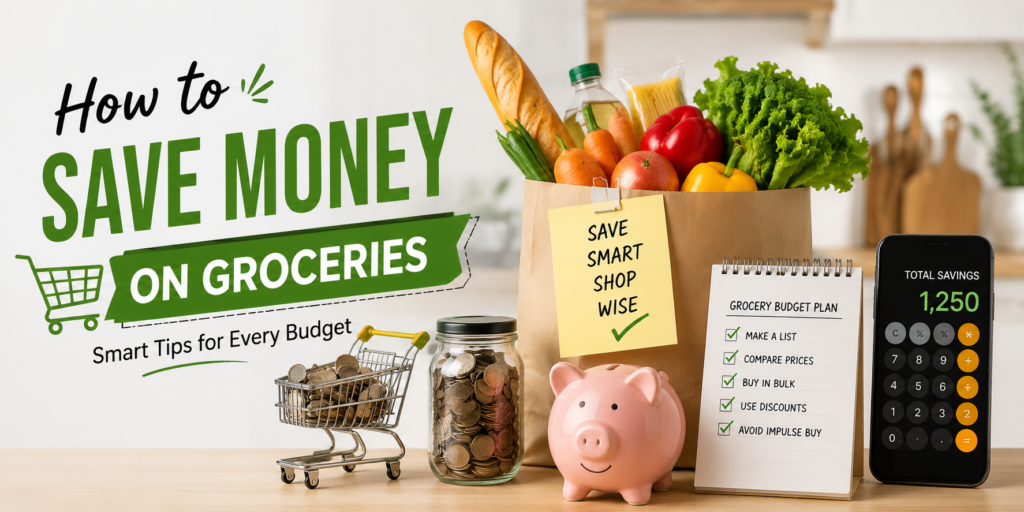
Grocery prices have gone up a lot over the last few years. This makes it really tough for families to stay on track with their budget.. The good thing is that you do not have to give up on good food or healthy eating to save money on groceries.
If you make simple changes to how you plan what you eat, go shopping and keep food at home you can save a lot of money on your monthly grocery bill.
You can do this whether you are shopping for a family or just, for yourself. Learning how to save money on groceries is a way to make the most of your money, throw away less food and make every trip to the store count.
In this guide we will show you some effective ways to save money on groceries. You can still eat tasty food without spending too much money.
Why Grocery Costs Are Rising
Before exploring money-saving strategies, it’s helpful to understand why grocery expenses have increased:
- Inflation affecting food prices
- Higher transportation and fuel costs
- Supply chain disruptions
- Seasonal shortages
- Increased demand for packaged and convenience foods
Although these factors are outside your control, your shopping habits can make a significant difference.
1. Plan Your Meals Before Shopping
Meal planning is one of the easiest ways to save money on groceries.
Instead of buying random items, create a weekly meal plan based on what your family actually eats. Check your refrigerator and pantry first so you can use ingredients you already have.
Benefits include:
- Buying only what you need
- Reducing food waste
- Saving time during the week
- Avoiding expensive last-minute takeout
Pro Tip: Build meals around ingredients already available in your kitchen.
2. Always Make a Grocery List
Shopping without a list often leads to impulse purchases.
Create a categorized grocery list such as:
- Fruits
- Vegetables
- Dairy
- Pantry essentials
- Frozen foods
- Snacks
- Household items
A shopping list keeps you focused and prevents overspending.
3. Set a Weekly Grocery Budget
One of the smartest ways to save money is by deciding your spending limit before entering the store.
For example:
- Single person: ₹1,000–₹2,000/week
- Couple: ₹2,000–₹3,500/week
- Family of four: ₹3,500–₹6,000/week
Tracking your grocery spending helps identify unnecessary purchases and improves financial planning.
4. Compare Prices Before Buying
Never assume one store always offers the best deal.
Compare prices using:
- Grocery store flyers
- Online grocery websites
- Mobile shopping apps
- Local supermarket offers
Sometimes buying the same products from different retailers can result in significant monthly savings.
5. Buy Store Brands Instead of Premium Brands
Store-brand or private-label products often provide similar quality at a lower price.
Products worth buying as store brands include:
- Rice
- Flour
- Sugar
- Salt
- Pasta
- Spices
- Canned goods
- Cleaning supplies
Many store-brand products are manufactured by the same companies that produce premium brands.
6. Purchase Pantry Staples in Bulk
Buying bulk quantities works well for products with a long shelf life.
Examples include:
- Rice
- Wheat flour
- Lentils
- Oats
- Dry beans
- Cooking oil
- Sugar
Bulk purchases usually have a lower cost per unit, helping reduce long-term grocery expenses.
Avoid buying perishables in bulk unless you know you’ll use them before they spoil.
7. Take Advantage of Discounts and Coupons
Look for:
- Weekly supermarket deals
- Digital coupons
- Cashback offers
- Credit card rewards
- Loyalty programs
- Festival sales
Combining discounts with planned purchases can maximize savings.
8. Buy Seasonal Fruits and Vegetables
Seasonal produce is generally:
- Fresher
- More nutritious
- More affordable
- Better tasting
For example:
- Mangoes in summer
- Oranges in winter
- Cauliflower during cooler months
Buying seasonal foods can noticeably reduce your grocery bill.
9. Don’t Shop When You’re Hungry
Research consistently shows that hungry shoppers buy more unnecessary items.
Shopping after a meal helps you:
- Avoid impulse snacks
- Stay focused on your list
- Stick to your budget
It’s one of the simplest money-saving habits you can adopt.
10. Reduce Food Waste
Throwing away food is like throwing away money.
Reduce waste by:
- Storing food properly
- Freezing leftovers
- Using older ingredients first
- Planning meals around perishables
- Repurposing leftovers into new dishes
Even saving one meal per week can make a noticeable difference over time.
11. Cook More Meals at Home
Prepared meals and restaurant food cost considerably more than home-cooked meals.
Simple home cooking helps you:
- Save money
- Eat healthier
- Control ingredients
- Reduce food waste
Batch cooking on weekends can save both time and money during busy weekdays.
12. Avoid Impulse Purchases
Retail stores intentionally place tempting products near checkout counters.
Before adding something to your cart, ask yourself:
- Do I really need this?
- Was it on my list?
- Can I buy it later if needed?
These simple questions help reduce unnecessary spending.
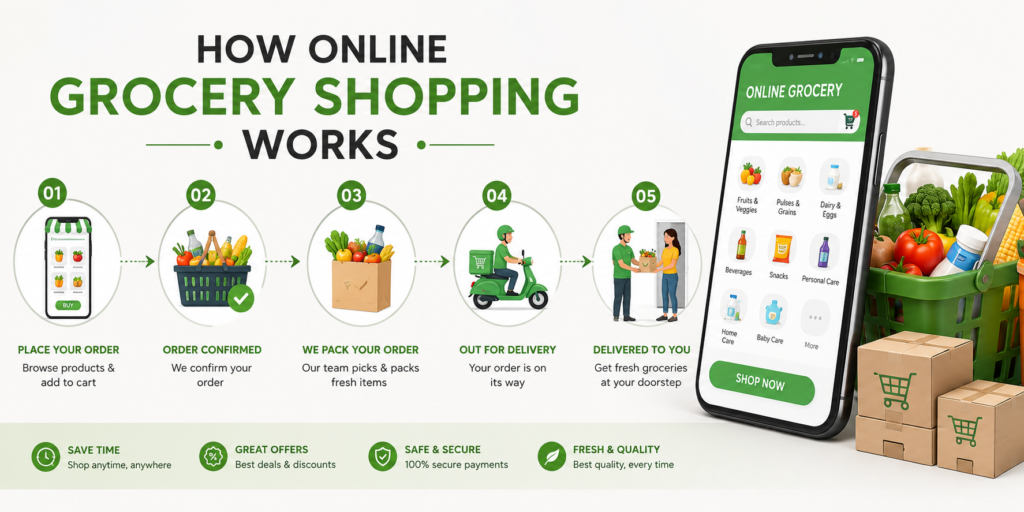
13. Shop Online to Control Spending
Online grocery shopping offers several advantages:
- Easy price comparison
- Digital coupons
- Budget tracking
- Reduced impulse buying
- Convenient home delivery
Many online retailers also provide exclusive discounts for first-time or repeat customers.
14. Choose Whole Foods Over Processed Foods
Highly processed foods often cost more while providing less nutritional value.
Choose affordable whole foods such as:
- Lentils
- Rice
- Eggs
- Oats
- Potatoes
- Fresh vegetables
- Bananas
- Beans
These ingredients are budget-friendly and can be used in a wide variety of meals.
15. Track Your Grocery Spending Every Month
Keeping a record of grocery expenses helps identify spending patterns.
Use:
- Budgeting apps
- Excel spreadsheets
- Banking apps
- A simple notebook
Monitoring your expenses allows you to set realistic savings goals and adjust your shopping habits accordingly.
Common Grocery Shopping Mistakes to Avoid
Avoid these costly habits:
- Shopping without a list
- Buying too many snacks
- Ignoring unit prices
- Purchasing perishables in excess
- Throwing away leftovers
- Shopping while hungry
- Falling for “Buy More” promotions you don’t actually need
Benefits of Smart Grocery Shopping
Following these strategies can help you:
- Save hundreds or even thousands each year
- Reduce food waste
- Eat healthier
- Stay within your monthly budget
- Improve meal planning
- Lower financial stress
Small changes in your shopping routine can produce significant long-term savings.
Final Thoughts
Saving money on groceries is not about buying things. It is about buying things in a way. When you plan what you want to eat you make a list of the things you need to buy. You compare the prices of the things you want to buy. You buy fruits and vegetables that’re in season. You do not buy things that you do not need. This can really help you save money on groceries. You can still buy things.
Try a few of these things when you go shopping time. Just try two or three things to start with. If you keep doing these things you will save a lot of money on groceries over time. You will also be more organized when you go shopping. You will not feel stressed. Saving money on groceries, with these strategies is a thing. You can save money on groceries. Still buy the things you want.
Frequently Asked Questions (FAQs)
1. What is the easiest way to save money on groceries?
The easiest way is to plan your meals, make a shopping list, stick to your budget, and avoid impulse purchases.
2. Is buying groceries online cheaper?
It can be. Online grocery stores often offer digital coupons, cashback, and price comparisons that help shoppers save money.
3. Should I buy groceries in bulk?
Bulk buying is a smart option for non-perishable pantry staples like rice, flour, lentils, oats, and cooking oil. Avoid bulk-buying fresh foods unless you’ll use them before they spoil.
4. How can I reduce food waste?
Store food properly, freeze leftovers, use older ingredients first, and plan meals around what you already have.
5. How much should a family spend on groceries each month?
The ideal grocery budget depends on family size, location, and eating habits. Setting a monthly budget and tracking expenses helps control costs effectively.