Protein is one thing your body really needs every day.
You need it whether you want to build muscle, lose weight, feel full for a time or just live a healthy life.
The right high protein foods can really help.
Grocery stores now have healthy food options because people want to eat healthy.
You can find foods that fit your budget and diet.
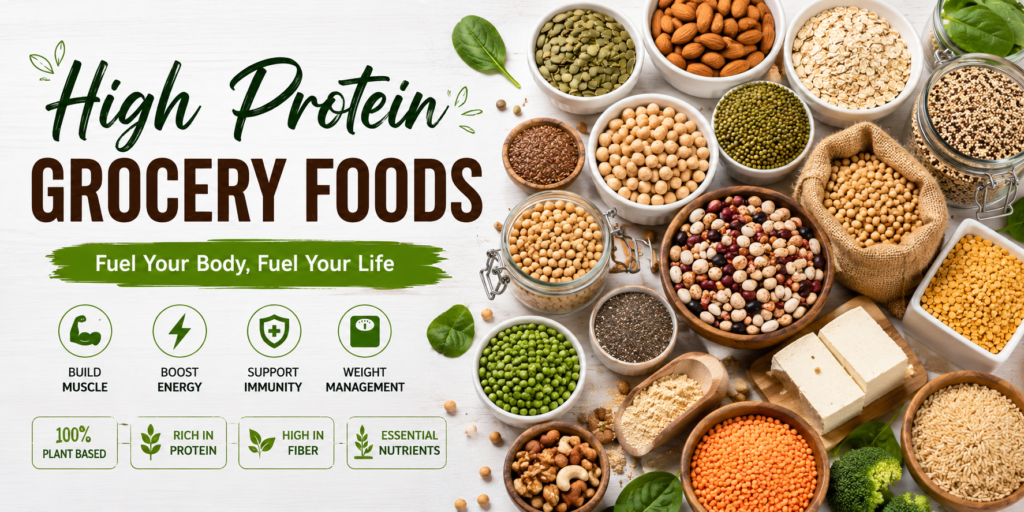
There are lentils, beans, dairy, eggs, lean meats and healthy snacks.
In this guide you will find the high protein foods, their health benefits and tips on how to buy them.
You will also learn how to add them to your meals.
The goal is to make it easy to choose and eat protein foods.
They can make a difference in how you feel and look.
What Are High Protein Grocery Foods?
High protein grocery foods are everyday food items that contain a substantial amount of protein per serving. Protein helps your body:
- Build and repair muscles
- Support healthy bones
- Improve metabolism
- Keep you feeling full for longer
- Maintain healthy skin, hair, and nails
- Support immune function
Including protein in every meal can help reduce unnecessary snacking and improve overall nutrition.
Why Protein Should Be on Every Grocery List
Adding protein-rich foods to your grocery shopping list offers several health benefits:
Supports Muscle Growth
Protein provides essential amino acids that help repair and build muscle tissue after exercise.
Helps with Weight Management
High-protein foods increase satiety, helping you stay full longer and reduce calorie intake.
Maintains Energy Levels
Protein provides sustained energy without causing rapid spikes in blood sugar.
Supports Healthy Aging
Adequate protein intake helps preserve muscle mass and strength as you age.
Improves Overall Nutrition
Many protein-rich foods also contain vitamins, minerals, healthy fats, and fiber.
Best High Protein Grocery Foods to Buy
1. Eggs
Eggs are one of the most affordable and nutritious protein sources.
Protein: Approximately 6 grams per egg
Benefits:
- Rich in Vitamin B12
- Contains healthy fats
- Supports brain health
- Easy to prepare
2. Greek Yogurt
Greek yogurt contains almost double the protein of regular yogurt.
Protein: 15–20 grams per serving
Benefits:
- Excellent for breakfast
- Rich in probiotics
- Supports gut health
- Great for smoothies
3. Cottage Cheese (Paneer)
Paneer is a favorite protein source for vegetarians.
Protein: 18–20 grams per 100 grams
Benefits:
- Rich in calcium
- Helps muscle recovery
- Versatile ingredient
- Keeps you full
4. Lentils (Dal)
Lentils are among the healthiest grocery staples.
Popular varieties include:
- Moong Dal
- Masoor Dal
- Toor Dal
- Urad Dal
- Chana Dal
Protein: 9–18 grams per cooked cup
Benefits:
- High in fiber
- Budget-friendly
- Excellent vegetarian protein
5. Chickpeas
Chickpeas are nutritious and versatile.
Protein: About 15 grams per cooked cup
Perfect for:
- Salads
- Hummus
- Curries
- Healthy snacks
6. Kidney Beans (Rajma)
Rajma is packed with protein and fiber.
Protein: Around 15 grams per cooked cup
Benefits:
- Supports digestion
- Heart-friendly
- Rich in antioxidants
7. Black Beans
Black beans are excellent for vegetarian meals.
Protein: Around 15 grams per cup
Use them in:
- Burritos
- Salads
- Rice bowls
- Soups
8. Soybeans
Soybeans are one of the richest plant-based protein sources.
Protein: Around 28 grams per cooked cup
Benefits:
- Complete protein
- Rich in iron
- Supports bone health
9. Tofu
Made from soybeans, tofu is an excellent meat alternative.
Protein: 10–15 grams per serving
Ideal for:
- Stir-fries
- Salads
- Sandwiches
- Curries
10. Chicken Breast
Chicken breast is one of the leanest animal protein sources.
Protein: Around 31 grams per 100 grams
Benefits:
- Low in fat
- Supports muscle growth
- Easy to cook
11. Fish
Fish such as salmon, tuna, and rohu are rich in protein and healthy fats.
Protein: 20–25 grams per serving
Benefits:
- Rich in Omega-3 fatty acids
- Supports heart health
- Improves brain function
12. Lean Meat
Lean cuts of beef or mutton provide quality protein.
Benefits:
- Rich in iron
- Vitamin B12
- Supports muscle development
Consume in moderation as part of a balanced diet.
13. Milk
Milk is a complete protein source.
Protein: Around 8 grams per glass
Benefits:
- Rich in calcium
- Supports bone health
- Easy daily protein source
14. Cheese
Cheese offers protein along with calcium.
Choose low-fat options whenever possible.
15. Nuts
Healthy options include:
- Almonds
- Peanuts
- Pistachios
- Cashews
- Walnuts
Benefits:
- Healthy fats
- Protein
- Vitamins
- Minerals
16. Seeds
Protein-rich seeds include:
- Pumpkin seeds
- Chia seeds
- Sunflower seeds
- Flaxseeds
Perfect for:
- Smoothies
- Oatmeal
- Yogurt
- Salads
17. Peanut Butter
Natural peanut butter is both delicious and nutritious.
Protein: Around 8 grams per 2 tablespoons
Choose varieties without added sugar.
18. Oats
Oats contain more protein than many breakfast cereals.
Benefits:
- Rich in fiber
- Heart healthy
- Ideal breakfast option
19. Quinoa
Quinoa is considered a complete plant protein.
Benefits:
- Gluten-free
- High in fiber
- Rich in minerals
20. Protein Snacks
Healthy grocery options include:
- Roasted chickpeas
- Roasted peanuts
- Protein bars
- Mixed nuts
- Greek yogurt cups
High Protein Grocery Shopping Tips
When shopping for protein-rich foods:
- Read nutrition labels carefully.
- Compare protein content per serving.
- Choose minimally processed foods.
- Buy seasonal fresh products whenever possible.
- Stock both animal and plant protein sources.
- Avoid products with excessive added sugar.
- Include frozen protein options for convenience.
- Purchase pantry staples like lentils, beans, and oats in bulk to save money.
Sample High Protein Grocery Shopping List
Dairy
- Greek yogurt
- Milk
- Paneer
- Cottage cheese
- Cheese
Poultry & Seafood
- Chicken breast
- Fish
- Eggs
Plant Protein
- Lentils
- Chickpeas
- Kidney beans
- Black beans
- Soybeans
- Tofu
Healthy Snacks
- Nuts
- Seeds
- Peanut butter
- Protein bars
Whole Grains
- Oats
- Quinoa
- Brown rice
How to Add More Protein to Your Daily Diet
Simple ways to increase protein intake include:
- Start your day with eggs or Greek yogurt.
- Add lentils or beans to soups and salads.
- Snack on nuts instead of chips.
- Include paneer or tofu in lunch and dinner.
- Spread peanut butter on whole-grain toast.
- Add chia or pumpkin seeds to smoothies.
- Keep boiled eggs ready for quick snacks.
Small dietary changes can significantly improve your daily protein intake without making meals complicated.
Common Mistakes to Avoid
Many shoppers unintentionally reduce the nutritional quality of their grocery basket. Avoid these common mistakes:
- Buying processed protein foods with excessive sodium.
- Ignoring serving sizes on labels.
- Depending only on protein supplements instead of whole foods.
- Skipping plant-based protein options.
- Choosing flavored yogurt with high sugar content.
- Forgetting fiber-rich protein sources like beans and lentils.
Conclusion
When you want to be healthy, picking the high protein foods at the store is a great place to start. You can get a lot of energy. Help your body when you eat these foods. It does not matter if you eat meat or not because there are a lot of high protein foods you can buy.
You can buy eggs and dairy products and other things like beans and nuts. There are also seeds and whole grains that’re good for you. If you put these things in your shopping cart you and your family will be healthy. Buying protein foods when you go to the store is an easy way to eat better and feel good for a long time. High protein foods, like eggs and nuts and seeds and whole grains are all choices.
Frequently Asked Questions (FAQs)
1. What are the best high protein grocery foods for vegetarians?
Paneer, Greek yogurt, lentils, chickpeas, kidney beans, tofu, soybeans, quinoa, nuts, and seeds are excellent vegetarian protein sources.
2. Which grocery food has the highest protein?
Chicken breast, soybeans, fish, paneer, eggs, and Greek yogurt are among the highest-protein grocery foods commonly available.
3. Are high protein foods good for weight loss?
Yes. Protein helps control hunger, supports muscle maintenance, and promotes fullness, making it easier to manage calorie intake when combined with a balanced diet.
4. Can I get enough protein without eating meat?
Absolutely. Plant-based foods such as lentils, beans, tofu, soy products, quinoa, nuts, seeds, and dairy products can provide sufficient protein when eaten in appropriate amounts.
5. How much protein should adults eat daily?
Protein needs vary based on age, activity level, and health goals. Most healthy adults benefit from approximately 0.8–1.2 grams of protein per kilogram of body weight, while athletes or highly active individuals may require more. Consult a healthcare professional or dietitian for personalized recommendations.